The global lab grown diamond industry has experienced explosive growth over the past decade, growing from a niche industry into a popular choice for wholesale suppliers, jewelry brands, and individual consumers. Driven by its cost advantages, eco-friendly production process, and identical optical and physical properties to natural diamonds, the market demand for authentic lab created diamonds continues to soar. However, rapid market expansion has also given rise to rampant mislabeling and chaotic naming practices across the jewelry supply chain. Countless imitation stones and composite gemstones are marketed as lab grown diamonds through vague and misleading industry jargon, creating severe confusion for wholesale buyers and leading to widespread wrong purchases and economic losses.
What Is a Real Lab Grown Diamond
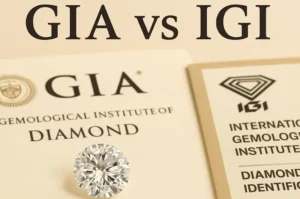
It’s essential to figure out definition of lab grown diamonds and easy-recognizable identifying features to tell them from fake ones. Two standard official names used by credible jewelry and gemological institutions to describe or refer to authentic lab grown diamonds are lab grown and lab created. Lab grown gemstones appear on formal IGI certificates.
Genuine lab grown diamonds possess fixed and irreplaceable key attributes. Chemically, they are pure carbon single crystal structures, identical in composition to natural mined diamonds. Physically, they rank 10 on the Mohs hardness scale, representing the hardest gemstone material on earth, with excellent scratch resistance and durability. In terms of industry authentication, all qualified premium lab grown diamonds are tested and graded by authoritative international gem institutions and issued official IGI/GIA certificates. The most critical industry rule is drawing a clear boundary between real lab diamonds and two types of fake alternatives: diamond simulants and composite stones. No simulant or composite material can meet the full physical, chemical, and certification standards of genuine lab grown diamonds.
Most Common Misused Diamond Names
The biggest trap in the current diamond market lies in a variety of fancy marketing names that sound like real diamonds but not diamond materials. These misused terms are the primary cause of market confusion and must be clearly distinguished by every buyer.
First, the Hybrid Diamond is one of the most deceptive concepts in the industry. Many merchants package this product as a high-tech upgraded lab diamond, but it is essentially a composite material with diamond infusion rather than a complete single-crystal diamond. Its internal base material is usually non-carbon gemstone or synthetic substrate, with only a thin layer of nano-diamond particles attached to the surface, failing to meet the standard of pure diamond crystals.
Second, Diamond-Infused Stone is another typical misleading product. Literally interpreted as “diamond-injected diamond”, it easily misleads buyers into believing it is a genuine lab diamond. In fact, it adopts a non-diamond base material, with only tiny diamond particles permeated on the surface. The overall gem structure is not a complete diamond, so it cannot be identified or certified as a lab grown diamond.
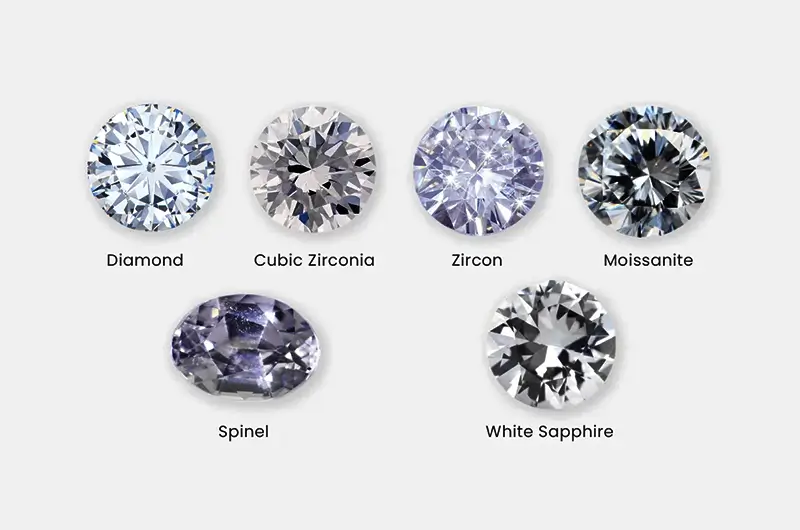
In addition, Diamond Simulant / Simulated Diamond is a general collective term covering all diamond imitations in the market, including Cubic Zirconia (CZ), moissanite, white sapphire and other common fake stones. This term itself indicates that the product is only a diamond look-alike, not a real diamond of any kind.
MLD / Nano Diamond are typical marketing buzzwords with no formal gemological definition. Most products labeled with these two names in the market are not lab grown diamonds at all; they are mostly moissanite or glass imitations packaged with high-tech concepts to raise product value.
Finally, faux / imitation diamond is the most straightforward description of fake diamonds. As a generic fake diamond description, it clearly defines that the product contains no real diamond composition, and all related products are 100% diamond counterfeits.
Classic Diamond Imitations Often Mislabeled as Lab Grown
Beyond confusing marketing terms, several classic low-cost imitation gemstones are frequently mislabeled as lab grown diamonds in wholesale and retail transactions, becoming the main victims of market fraud.
Cubic Zirconia (CZ) is the most common low-end diamond simulant in the jewelry industry. As a low-cost simulant, it features low production cost and transparent appearance similar to diamonds, so it is widely used in cheap fashion jewelry. However, CZ stones are easy to scratch and wear out after long-term wear, lacking the durability of real diamonds. Most importantly, CZ cannot pass the authoritative diamond grading test and has no official diamond certificate, which is the core basis for distinguishing it from lab grown diamonds.
Moissanite is another high-profile diamond substitute that is often confused with lab diamonds. Its chemical composition is silicon carbide material, not pure carbon, so it is fundamentally different from real diamonds. The most recognizable physical feature of moissanite is its obvious double refraction feature under magnification, a trait that pure carbon lab grown diamonds do not possess. Despite its brilliant fire color, it can never be classified as a genuine lab grown diamond.
White Sapphire & Rhinestone are also common fake diamond materials in the market. They belong to glass/mineral imitations with far lower hardness than real diamond’s Mohs 10 standard. These stones have dull fire and poor stability, and are often disguised as entry-level lab grown diamonds in low-priced jewelry packages, misleading inexperienced buyers.
Why These Misleading Terms Are Used in the Jewelry Industry
The widespread proliferation of misleading diamond names is not accidental, but driven by multiple commercial and industry factors. First and foremost, it is a typical marketing gimmick to raise product pricing and attract buyers. Imitation stones with low cost and low value can be sold at several times or even dozens of times the original price by packaging them with high-tech and professional diamond terms, bringing huge profit margins for merchants.
Secondly, such misleading naming methods effectively blurred product boundaries for wholesale and cross-border sales. In cross-border e-commerce and bulk wholesale scenarios, information asymmetry between buyers and sellers is prominent. Many foreign wholesale buyers cannot quickly identify professional gem terms, making it easy for merchants to mix imitation stones with genuine lab grown diamonds for sales, expanding market sales volume.
Finally, the entire jewelry industry suffers from lack of unified industry supervision on casual diamond jargon. At present, there is no unified global standard to restrict the use of terms such as Nano Diamond and hybrid diamond. Merchants can freely create and promote various false diamond concepts, resulting in the continuous proliferation of market chaos.
Practical Identification Tips for Buyers
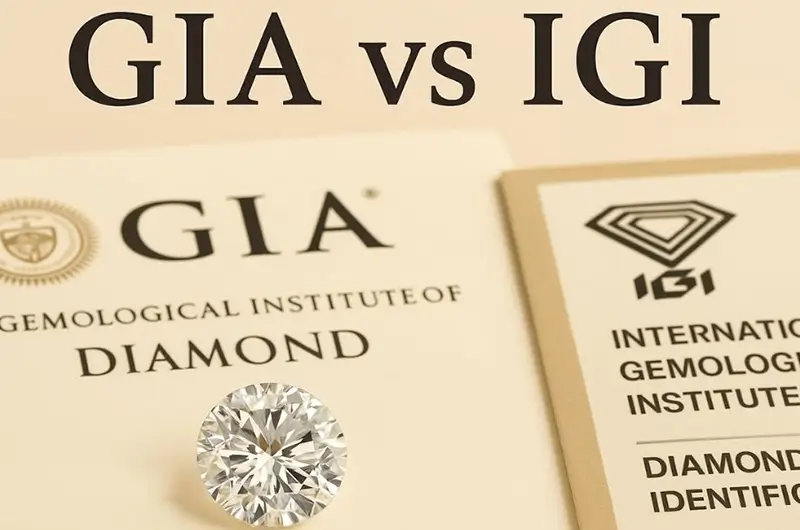
Faced with numerous misleading diamond names and imitation products, buyers need practical and efficient identification methods to avoid fraud. The most authoritative and effective way is to verify formal IGI/GIA certificate with “Lab Grown Diamond” label. Any genuine lab grown diamond will be attached with a complete official certificate with clear product attribute marking, while all imitation and composite stones cannot obtain such formal certification documents.
Secondly, buyers should take the initiative to reject products only marked with hybrid/infused/simulant keywords. Once the product title, description or parameter sheet contains these terms and does not have the official lab grown diamond certification, it can be directly judged as a non-genuine lab diamond product, and purchase should be avoided.
In addition, buyers can conduct simple physical judgment through professional observation tools. By checking the hardness, refraction and crystal structure features of the gemstone, they can quickly screen out obvious imitations.
By distinguishing real diamond attributes and false marketing gimmicks, buyers can effectively avoid purchase risks, stay away from counterfeit diamond products, and finally help buyers make accurate and cost-effective purchasing decisions in the complex jewelry market.