Lab grown diamond wholesale price is a focus among jewelry manufacturers, independent retailers and high-volume online jewelers or traders. Wholesale pricing of lab grown diamonds is leveling out in 2026 after approx. 10-year rapid capacity expansion, technological iteration and market demand shifting. Dive into deeper for more reasonable lab diamond sourcing strategies in making cost-effective market-oriented procurement decisions.
Lab Grown Diamond Wholesale Price Trends in Recent Years
Lab grown diamond wholesale prices plunge continuously due to surging expansion of global production capacity and technological evolving, especially those of low-to-medium CVD and HPHT rough diamonds. Global lab diamond rough capacity exceeded 40 million carats annually by 2025, with Chinese manufacturers contributing over 60% of total output, leading to a 30%–40% cumulative drop in wholesale prices for common 1-carat round stones during this period. Low-quality, uncertified small melee diamonds saw the most significant price drops, with profit margins compressed sharply for generic bulk products.
A turning point of wholesale lab diamond price comes for industry optimization and upgrading, phasing out small-scale factories and outdated production equipment. Those of mid-to-high certified lab diamonds have witnessed a modest price recovery while prices of junior uncertified lab diamond stay low and stable. Meanwhile, customized fancy cut stones and high-clarity color-graded diamonds have seen steady wholesale value appreciation, as market demand shifts from basic mass jewelry to personalized, high-end ornamental pieces. This structural fluctuation has made refined classification pricing and targeted sourcing core competitiveness for wholesale buyers.
What Does Lab Grown Diamond Wholesale Pricing Mean?
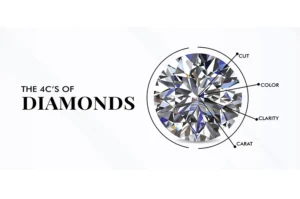
Lab grown diamond wholesale pricing refers to the bulk transaction price of polished loose lab diamonds or packaged melee diamonds between manufacturers, primary wholesalers, and jewelry brands, excluding retail premium, brand markup, and after-sales service fees. Different from natural diamonds whose pricing is dominated by international monopoly mechanisms, lab grown diamond wholesale prices are mainly determined by production technology, 4C parameters (carat, color, clarity, cut), certification qualification, stone shape, and order quantity.
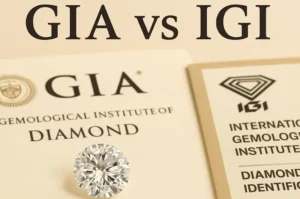
Certified stones with complete inspection reports have fixed tiered wholesale prices based on carat and quality, while uncertified products are priced purely by size and appearance. For manufacturers, wholesale pricing also includes flexible adjustment mechanisms for custom cutting, large-batch long-term orders, and mixed parcel orders, which helps downstream buyers control inventory costs and meet diversified market demands.
Wholesale Prices of Different-Type Lab Diamonds in 2026
Wholesale pricing of lab grown diamonds varies for many reasons. One 1ct lab diamond ranges from $200-900 in wholesale. Price differences derive from cut, color, clarity, growth method and certification.
1 Carat Round CVD Diamonds
Round lab diamond is the shape accounting for the largest share in wholesale market, favored for their pure white color, uniform crystal structure, and few internal defects. A 1ct round CVD diamond with D-F color and VS1-VS2 clarity stabilizes around $350-600 per carat. Premium stones graded at D or E with VS1 clarity and 3EX cut rank as the top tier. Stones graded as F-color with VS2 clarity are quoted within $380-480 in general by reputable manufacturer, provided they are free from straining and graining issues.
1 Carat Round HPHT Diamonds
Premium HPHT lab diamonds with top color grade and clarity scale are popular in wholesale. One flawless HPHT Type IIa round stones can still fetch $700-950 for premium quality and its low production yields from D-IF level. HPHT diamonds command larger market share for its cost effectiveness between wholesale prices and 4Cs specifications.
Fancy Shapes: Oval, Cushion, Pear
1-2ct fancy shape lab diamonds are top choices for independent jewelers or overseas traders. Wholesale prices of oval and elongated cushion-cut lab diamonds within 1.5-2ct, graded D-F, SI1-VS2 fall within $280-550 per carat. Their wholesale prices are affected by length-to-width ratios, windowing and extinction percentage. An elongated oval lab diamond with a 1.4-1.5 ratio and extraordinary light performance hold value better than poor-proportioned stones even with same color and clarity.
Cushion stones with soft cut surfaces are 5%–8% higher in wholesale price due to complex polishing processes; Fancy shapes have lower production yields than round cuts, so their wholesale prices are less volatile and have higher profit margins for retailers.
Princess Cut
Princess cut lab diamonds from 0.5 to 1.5ct remain a value-for-money option. A 1ct prince lab diamond with G-H color, VS1-VS2 clarity stabilizes $180-380 per carat, which is driven by corner integrity and table percentage heavily. They are ideal choices for mid-end jewelry like princess-cut engagement rings. Lower waste percentage of princess cut stones are provided with favorable bulk order policies in typical from manufacturers.
Emerald and Asscher Cuts
Geometric emerald and Asscher cuts feature clean and minimalist outlines and exquisite texture, being popular in high-end jewelry collections. The wholesale price of 1–3 carat emerald and Asscher cut lab diamonds (D-F color, VVS-VS clarity) ranges from $420–$700 per carat. The price rises significantly with carat weight: 3-carat high-quality stones have a wholesale premium of over 30% compared to 1-carat stones. Due to strict cutting symmetry requirements and low qualified yield, these two cuts maintain stable high wholesale prices, targeting high-end brand customization markets.
Radiant Cut
Radiant cut lab diamonds combine the advantages of round brilliant and emerald cuts, with both strong fire brilliance and neat geometric lines. The wholesale price for 1–2.5 carat radiant cut stones (F-G color, VS1-VS2 clarity) is $300–$520 per carat. Medium-sized 1.5–2 carat stones have the best market adaptability, with wholesale prices concentrated in the middle of the range.
Lab Grown Diamond Melee Parcels
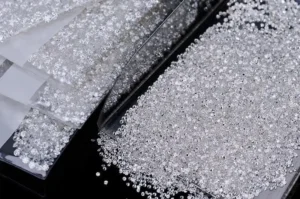
Wholesale melee lab diamonds are sold in calibrated parcels in general without one-by-one IGI certificates. They are the most applied accents onto fine jewelry like wedding bands, fashion accessories and the like. The wholesale price of standardized D-G color, VS clarity melee parcels span from $300 to $520 per carat. Although uncertified melees are lower in prices, year-round demand of full-faceted melees with DEF color are stable. Those sorted out for high-end setting earn greater wholesale premiums in market.
Wholesale Percentage Differences by Diamond Size and Carat
| Carat | Market Value Share | Market Scope | Source |
| Below 2.0 ct | 59.30% | Jewelry-grade CVD diamond market | PW Consulting 2026 |
| 2.0-4.0 ct | 30.60% | Jewelry-grade CVD diamond market | PW Consulting 2026 |
| Above 4.0 ct | 10.00% | Jewelry-grade CVD diamond market | PW Consulting 2026 |
| Below 2 ct | 52.40% | Overall LGD market (by size) | Straits Research 2025 |
| Below 2 ct | 67.00% | Overall LGD market (by size) | Persistence Market Research 2025 |
Export Share By Carat
Above export data from authoritative report is helpful for online sellers on e-commerce platforms and offline specialist stores in wholesale, enabling them to allocate purchase share across loose stones of different carat weights in proportion. In addition, jewelry traders should also take sales data as references before bulk purchasing.
Where to Source Lab Grown Diamonds?
Direct lab-grown diamonds ethical sourcing from lab grown diamond manufacturer is the optimal sourcing plan for long-term brand growth, eliminating intermediate markups, providing corresponding certificates, and supporting personalized cutting and customized processing.
In additional to renowned online platforms, many reputable lab diamond manufacturers own their official websites. Search the keyword like “wholesale lab grown diamonds + manufacturer/ supplier” and you will find most manufacturers who provide hassle-free services for jewelers intend to source loose lab diamonds in bulk.
Offline channels like premiere jewelry trade fairs like JCK show, HKTDC Hong Kong International Jewellery Show, where numerous manufacturers cluster to find buyers.
2026 U.S. Lab Grown Diamond Jewelry Trends
The U.S. market is the largest consumer market for lab grown diamond jewelry globally, and its 2026 consumption trends directly guide global wholesale procurement directions. First, engagement rings and wedding jewelry remain the primary demand, with consumers increasingly favoring unique fancy cuts over traditional round stones, driving the wholesale demand for oval, pear, and radiant cut lab diamonds to rise year-on-year.
Second, minimalist fine jewelry is popular among young consumers. Small-sized melee jewelry, layered pendant necklaces, and slim diamond rings have become daily fashion essentials, boosting stable wholesale demand for small high-precision melee parcels. Third, eco-friendly ethical consumption has become a mainstream selling point. More American consumers prioritize sustainable and conflict-free lab-grown diamonds when purchasing jewelry, making ethically sourced lab grown diamonds a competitive advantage for jewelry brands.
In addition, niche colored lab diamond jewelry (light pink, light yellow) is rising rapidly in the U.S. market, bringing new procurement demands for high-quality colored CVD and HPHT lab diamonds, opening up new profit space for downstream wholesalers and designers.
FAQs
What lab diamond shape looks bigger for the price?
Among all mainstream cuts, oval and pear-shaped lab diamonds have the best visual magnification effect.
What is the Top-Quality Risk in Loose Lab Grown Diamonds Wholesale?
The top-quality risk in wholesale is relying on certificates without physical inspection. Issues such as brown undertones, strain graining and color zoning do not appear on certificates.
What lab grown diamond variety is ideal for engagement rings?
A round brilliant or oval stone in D–G color and VS2 or better clarity, cut to excellent or ideal proportions, is the most popular and commercially reliable option.