End consumers often take lab diamonds with phosphorescence & fluorescence as defects, which cause subsequent returns and complaints. Therefore, most wholesalers, distributors and dealers tend to steer clear of those stones to avoid downstream disputes.
What are Phosphorescence & Fluorescence in Lab Diamonds?
Luminescence is a common physical phenomenon in synthetic diamond crystals, mainly divided into two core categories: fluorescence and phosphorescence, which differ significantly in luminous timing, duration and visual performance.
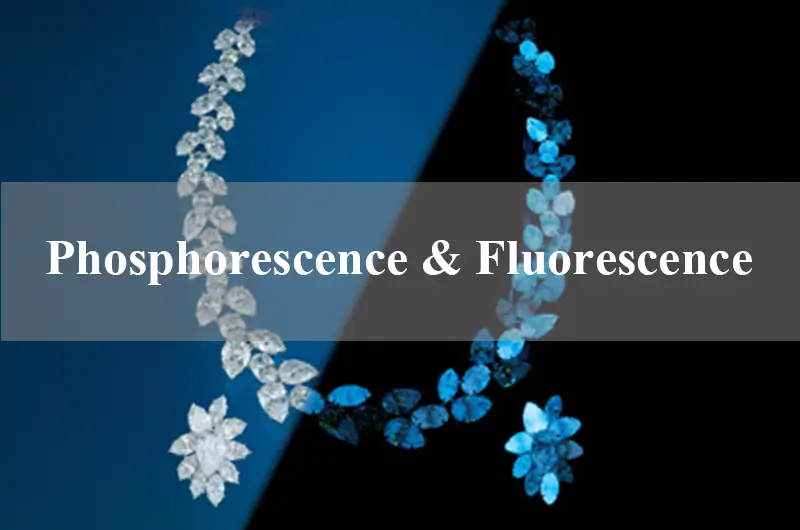
Lab diamond fluorescence refers to the instantaneous luminous effect produced by lab-grown diamonds under the excitation of ultraviolet light. The luminescence disappears immediately once the ultraviolet excitation source is removed, showing no residual glow in a dark environment.
Lab diamond phosphorescence is a delayed luminescence characteristic. After being stimulated by short-wave ultraviolet light, lab-grown diamonds can continue to emit visible afterglow for several seconds to tens of minutes in a completely dark environment, which is the most intuitive distinction between the two luminous properties.
Different growth technologies lead to different luminous characteristics of lab-grown diamonds. HPHT-grown lab diamonds are prone to obvious phosphorescence and fluorescence due to special crystal growth environments and trace impurity doping, while most original CVD lab-grown diamonds present stable non-luminous performance. Only CVD diamonds with post-growth high-temperature modification will produce abnormal luminescence. These inherent property differences form the core basis for manufacturers to screen and classify bulk diamonds. It is worth noting that lab grown diamond phosphorescence and lab grown diamonds fluorescence are natural crystal physical characteristics rather than quality defects such as inclusions or cracks, but they still affect the unified aesthetic of high-end customized jewelry.
Reasons for the Occurrence of Fluorescence and Phosphorescence
The generation of fluorescence and phosphorescence in lab-grown diamonds originates from microscopic crystal lattice defects and trace impurity element doping during the artificial growth process. In the HPHT diamond growth system, the catalyst materials used will introduce tiny boron and nitrogen atoms into the diamond crystal lattice, forming stable donor-acceptor defect energy levels. When ultraviolet energy irradiates the diamond surface, the electrons inside the crystal absorb energy and jump from the ground state to the high-energy excited state.
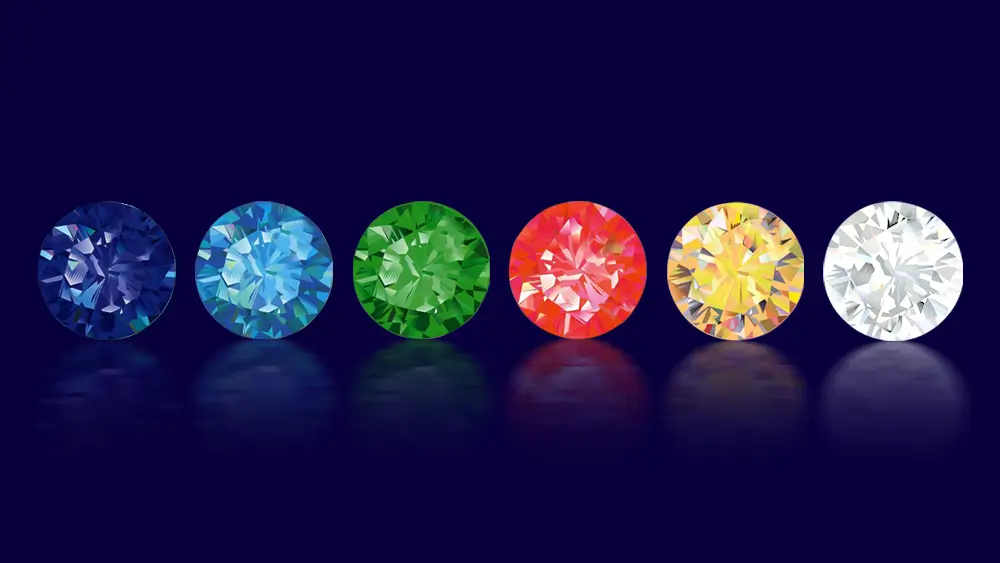
For fluorescence, excited electrons quickly return to the stable ground state and release energy in the form of visible light, forming instantaneous luminescence with a nanosecond-level lifetime. For phosphorescence, the special defect structure forms an energy barrier, which delays the falling speed of excited electrons. The electrons slowly release residual energy in the dark environment, resulting in long-term afterglow luminescence. The color of luminescence also varies with impurity content and defect distribution, with common blue-green and orange-yellow glow in luminous lab-grown diamonds. Natural diamonds rarely have visible phosphorescence, making this luminous feature a typical identification characteristic of partial lab-grown diamonds.
Are Phosphorescence & Fluorescence Harmful to Human?
Most end consumers have misunderstandings about diamond luminescence, worrying that phosphorescence and fluorescence will bring radiation or health hazards. In fact, the luminescence phenomenon of lab-grown diamonds is a pure physical energy conversion process, without any radioactive substances or harmful radiation participation. The diamonds only store ultraviolet light energy under external light excitation and release it slowly, which will not cause any damage to human skin, respiratory system or physical health.
Screening out Lab-Grown Diamonds with Fluorescence and Phosphorescence
To provide high-standard non-luminous lab-grown diamond raw materials for jewelry customization, manufacturers adopt a three-level professional detection and screening system, covering macroscopic visual identification, high-precision imaging detection and spectral quantitative analysis, to completely remove diamonds with phosphorescence and fluorescence in wholesale batches.
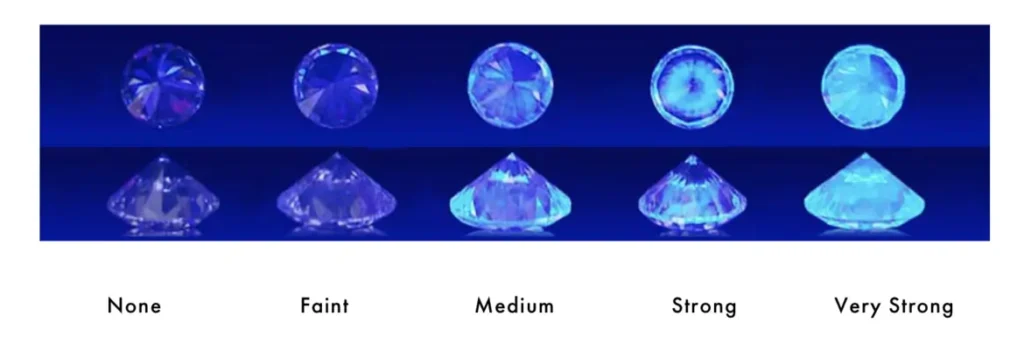
Ultraviolet Dark Chamber Testing
As the basic and most efficient primary screening method, ultraviolet dark chamber testing is widely used in mass diamond sorting. The testing process is carried out in a fully closed dark box to eliminate the interference of ambient stray light. Operators use standard 254nm short-wave ultraviolet lamps to excite cleaned lab-grown diamond samples after dark adaptation treatment. By observing the instantaneous fluorescence during excitation and the residual phosphorescence after cutting off the ultraviolet light source, the luminous performance of each diamond is judged manually. All diamonds with visible luminous phenomena are classified and eliminated separately to ensure the purity of bulk raw materials.
DiamondView Luminescence Imaging
For secondary precise screening, manufacturers apply DiamondView luminescence imaging technology with time-gated luminescence imaging function. This professional equipment uses deep ultraviolet pulsed light to excite diamonds, and captures the instantaneous fluorescence and delayed phosphorescence distribution images inside the crystal through high-sensitivity CCD cameras. Different from manual visual inspection, it can accurately identify weak and uneven luminescence that is difficult for human eyes to distinguish, record the growth zone luminescence characteristics of each diamond, and realize traceable and accurate screening of non-standard luminous diamonds.
Photoluminescence Spectrometer
As the final quantitative detection link, the photoluminescence spectrometer completes the precision verification of suspicious samples. The equipment can accurately collect the luminescence spectrum and decay curve of lab-grown diamonds, distinguish the nanosecond-level fluorescence lifetime and millisecond-to-second-level phosphorescence lifetime through data analysis, and quantitatively judge the luminescence intensity and defect type. This instrumental detection method avoids the subjective error of manual identification, ensures zero omission in screening, and provides reliable quality assurance for wholesale non-luminous lab-grown diamonds.
Typical Interferences and Misjudgments in Testing
In the actual mass screening process, multiple external factors will interfere with the detection results, leading to false judgment of diamond luminescence. Effective quality control must eliminate all interference sources to ensure detection accuracy. The most common interference comes from residual polishing powder, oil stains and dust on the diamond surface. These attachments will produce spontaneous phosphorescence under ultraviolet excitation, resulting in false positive detection results. Therefore, all diamonds must be cleaned with absolute ethanol and dried before testing.
In addition, the self-luminescence of the detection platform, the residual glow of ultraviolet lamps, and the light reflection of adjacent diamonds will also affect observation results. The standard detection process requires blank contrast testing before sample detection, uses non-luminous PTFE material as the test bench, and adopts electronic shutter rapid light cutoff technology to avoid lamp residual light interference. Meanwhile, single-point independent detection is adopted for batch samples to prevent cross-reflection luminescence between diamonds. Human eye dark adaptation insufficiency is also a common cause of false negative misjudgment; standardized dark adaptation operation can effectively solve this problem and ensure the stability and accuracy of mass screening.
Sourcing lab grown diamonds from the professional manufacturer allows all kinds of jewelry traders, importers, retailers to avoid such risks. We control every production and detection link to avoid abnormal luminescence of raw materials. Rest assurance to request for quote by filling following online inquiry forms. Visit the website wholesalelab-growndiamonds.com for more information and services.