Every stunning piece of jewelry—whether a dainty everyday necklace, a statement bracelet, or a timeless pearl strand—relies on one tiny but essential component: the clasp. Often overlooked, jewelry clasps determine a piece’s wearability, security, comfort, and style. A perfect clasp keeps your accessories safe from slipping off, elevates the overall design, and makes putting on and taking off jewelry effortless.
With countless clasp designs tailored for different jewelry types, wear scenarios, and aesthetic styles, it can be overwhelming to tell them apart. Today, we’re breaking down 25 common jewelry clasps, covering their unique features, advantages, limitations, and best uses. Whether you’re a jewelry lover, DIY crafter, or small business owner, this complete guide will help you pick the ideal clasp for every piece.
1. Lobster Clasp / Lobster Claw Clasp
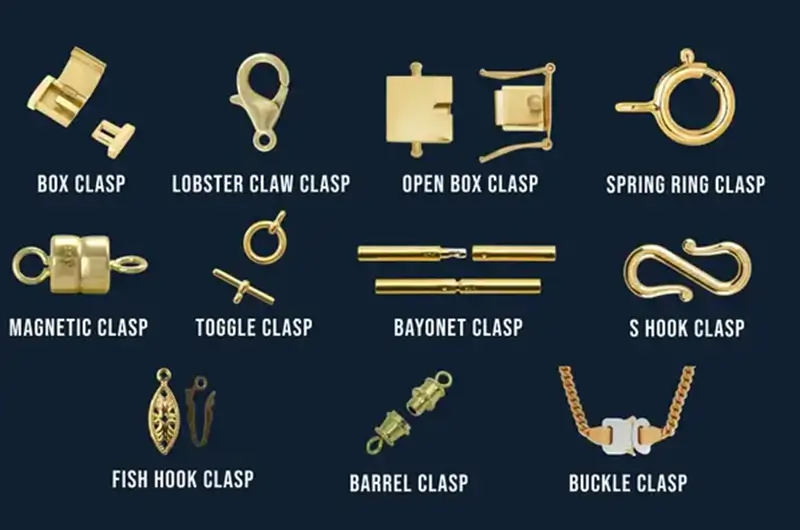
The lobster clasp (lobster claw clasp) is the most universal, versatile clasp in modern jewelry design, named for its curved, claw-like shape. It features a spring-loaded lever that opens the clasp when pressed and snaps shut automatically for a tight, secure lock. Available in countless sizes, tones, and finishes, it fits nearly all necklaces and bracelets.
Pros: Ultra-secure, resistant to accidental opening, easy one-hand operation, highly durable, compatible with thin to heavy chains, and discreet enough not to overpower jewelry designs.
Cons: Small levers can be tricky for those with limited hand dexterity; low-quality styles may snag hair or clothing.
Best for: Everyday necklaces, charm bracelets, medium-heavy pendants, and casual fine jewelry.
2. Spring Ring Clasp
A classic minimalist staple, the spring ring clasp is a small, circular metal ring with a spring-loaded opening. Squeeze the tiny lever to expand the ring, loop it through the chain end, and release to close. It’s one of the most lightweight and affordable clasp options on the market.
Pros: Super lightweight, sleek and invisible, budget-friendly, perfect for delicate fine jewelry.
Cons: Less secure than lobster clasps; prone to spring fatigue over time, leading to accidental opening; not ideal for heavy pieces.
Best for: Dainty gold/silver necklaces, thin chain bracelets, and lightweight everyday accessories.
3. Magnetic Clasp
Magnetic clasps use strong neodymium magnet force to snap two clasp halves together, requiring zero squeezing, pushing, or twisting. They are game-changers for effortless wear, designed for quick, tool-free fastening.
Pros: Incredibly easy to use (ideal for kids, elders, and people with arthritis), fast to fasten, smooth aesthetic, available in decorative and plain styles.
Cons: Can pop open if pulled hard or caught on objects; magnets may interfere with pacemakers or electronic devices; lower security for active wear.
Best for: Layered necklaces, casual bracelets, kids’ jewelry, and wearable accessories for limited dexterity users.
4. Jewelry Box Clasp / Open Box Clasp
Box clasps (including open box clasps) are premium, structured fasteners composed of a rigid box socket and a matching insert tab. The tab clicks firmly into the box for a locked fit; open box clasps feature a hollow, open-frame design for a lighter, more delicate look while retaining core security.
Pros: Elegant, high-end appearance, extremely sturdy, zero accidental openings, adds a luxurious finish to fine jewelry.
Cons: Bulkier than basic clasps; slightly pricier; requires precise alignment to fasten.
Best for: Fine gold/silver bracelets, tennis bracelets, luxury statement necklaces, and formal jewelry.
5. Toggle Clasp
A trendy, decorative functional clasp, the toggle clasp consists of two parts: a straight bar (toggle bar) and a circular/oval ring. Simply insert the bar through the ring and let it rest horizontally to lock in place. It doubles as a stylish design feature, not just a hidden fastener.
Pros: Stylish and visible (adds design value), easy to fasten, secure when properly locked, works for thick chains.
Cons: Can loosen and open with vigorous movement; not ideal for ultra-delicate pieces.
Best for: Chunky chain bracelets, boho necklaces, fashion statement jewelry, and layered accessories.
6. S Hook Clasp
One of the oldest, simplest jewelry closures, the S hook clasp is an S-shaped metal hook that loops through two chain end rings. It’s a staple in artisanal, bohemian, and handcrafted jewelry for its rustic charm.
Pros: Ultra-simple design, lightweight, fully adjustable, affordable, highly customizable for handmade pieces.
Cons: Low security; easily slides open with movement; no locking mechanism.
Best for: Handmade boho jewelry, beaded necklaces, casual layering pieces, and craft jewelry projects.
7. Fold Over Clasp
Also called a tongue clasp, the fold over clasp features a hinged flap that folds over a metal tongue and locks into place. It’s a low-profile, seamless clasp designed for flat jewelry strands and beaded pieces.
Pros: Flush, seamless finish, secure fold-lock mechanism, slim and comfortable against skin, durable for daily wear.
Cons: Requires two hands to fasten; repeated folding may loosen cheap metal versions.
Best for: Beaded bracelets, flat cord jewelry, omega necklaces, and delicate strand accessories.
8. Barrel Clasp
Barrel clasps (also called screw clasps) are cylindrical, two-part fasteners that screw together to lock. One half has internal threads, and the other has external threads—twist to close tightly for a firm hold.
Pros: Sleek, streamlined, completely seamless when closed, excellent security, water-resistant fit.
Cons: Slow to fasten (requires twisting); easy to cross-thread if misaligned; tiny threads are hard for dexterity-limited users.
Best for: Pearl strands, fine beaded necklaces, minimalist jewelry, and waterproof wearable pieces.
9. Bayonet Clasp
A precision-engineered locking clasp, the bayonet clasp uses a twist-and-lock mechanism (push, twist, and click into place). Popular in high-end and vintage jewelry, it offers industrial-grade security in a compact size.
Pros: Extremely secure, tamper-resistant, compact, durable for long-term wear, vibration-proof.
Cons: Slightly complex to master for new users; more expensive than basic clasps.
Best for: Luxury vintage jewelry, high-value pendants, premium bracelets, and heirloom pieces.
10. Figure 8 Safety Clasp
The figure 8 safety clasp is a tiny, affordable safety accessory paired with primary clasps. Shaped like the number 8, it adds a secondary lock to prevent accidental opening of spring rings or lobster clasps.
Pros: Inexpensive, ultra-lightweight, adds extra security, easy to install, prevents jewelry loss.
Cons: Small and delicate; easy to lose if dropped; only a supplementary fastener.
Best for: All fine necklaces/bracelets (as a safety backup), valuable everyday jewelry.
11. Mystery Clasp
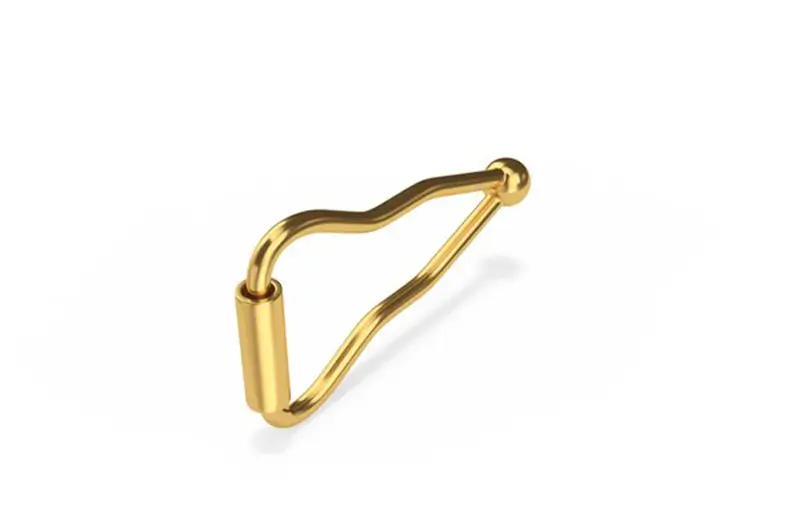
A luxury hidden closure, the mystery clasp is designed to be completely invisible when worn. It tucks seamlessly between jewelry links or strands, with no visible external hardware, creating a continuous, flawless jewelry line.
Pros: Invisible, ultra-luxurious finish, smooth seamless look, elevates high-end jewelry design.
Cons: High cost, complex craftsmanship, delicate, requires careful handling.
Best for: High couture jewelry, premium pearl necklaces, formal fine jewelry, and red-carpet accessories.
12. Pearl Clasp
Pearl clasps are specialty clasps tailored exclusively for pearl strands and delicate gemstone necklaces. Typically small, polished, and low-profile, most are box or barrel-style clasps with a refined, subtle finish that doesn’t distract from pearl luster.
Pros: Elegant and understated, perfectly sized for thin pearl strands, secure lock, preserves jewelry’s delicate aesthetic.
Cons: Specialized use only; not suitable for thick or heavy chain jewelry.
Best for: Freshwater/saltwater pearl necklaces, delicate gemstone strands, and bridal pearl jewelry.
13. Bracelet Catch Clasp
Bracelet catch clasps are universal, sturdy fasteners designed specifically for bracelet wear. They combine the security of box clasps with a slim, wrist-friendly profile, optimized for the frequent movement of bracelets.
Pros: Wrist-movement resistant, low-profile, comfortable for all-day wear, durable, versatile for all bracelet styles.
Cons: Bracelet-specific design; not ideal for long necklaces.
Best for: All fashion and fine bracelets, charm bracelets, and everyday wrist accessories.
14. Fish Hook Clasp
Named for its fish-hook shape, this minimalist clasp features a curved hook that latches into a fixed loop. It’s a staple in dainty, vintage, and handmade lightweight jewelry.
Pros: Ultra-thin, lightweight, delicate aesthetic, easy to fasten, budget-friendly.
Cons: Low security; prone to unhooking with movement; not for heavy pieces.
Best for: Dainty vintage necklaces, thin beaded bracelets, and minimalist handmade jewelry.
15. Buckle Clasp
Modeled after belt buckles, buckle clasps are functional, stylish fasteners with a frame and adjustable pin. They offer full length adjustability and double as a prominent design feature for bold jewelry.
Pros: Fully adjustable size, highly secure, trendy industrial style, durable for daily wear.
Cons: Bulky for delicate pieces; adds noticeable weight to fine jewelry.
Best for: Chunky bracelets, leather cord jewelry, streetwear fashion pieces, and adjustable statement accessories.
16. Sliding Clasp
Sliding clasps (also called slide locks) are adjustable dual-strand fasteners. Two tubes slide along cord or chain to tighten or loosen jewelry, enabling infinite size adjustment for a custom fit.
Pros: 100% adjustable fit, no fixed size limit, easy to modify wear tightness, sleek modern look.
Cons: Can slip loose with heavy pulling; less rigid lock than fixed clasps.
Best for: Adjustable cord bracelets, layered necklaces, custom-fit casual jewelry.
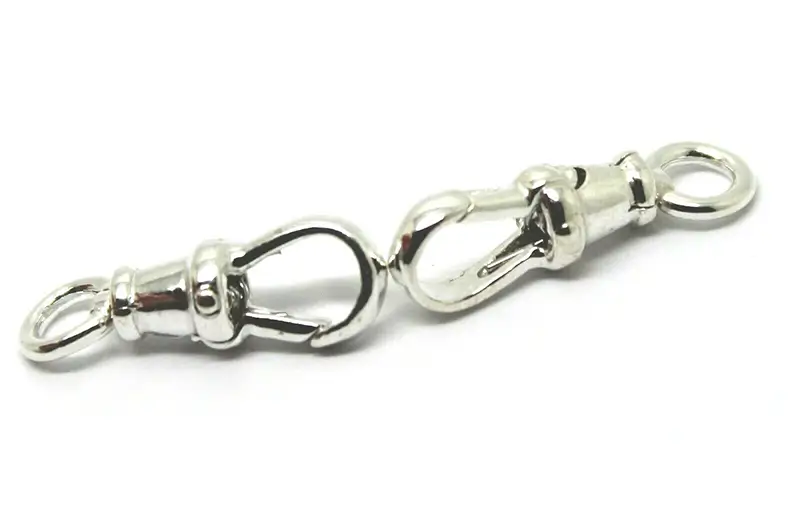
17. Albert Swivel Clasp
A classic vintage hardware clasp, the Albert swivel clasp features a 360° rotating swivel base paired with a lobster or trigger hook. Originally designed for pocket watches, it prevents chain tangling and twisting.
Pros: Prevents tangling, highly flexible, durable vintage style, multi-functional use.
Cons: Slightly bulkier than standard lobster clasps; vintage aesthetic limits modern minimalist designs.
Best for: Watch chains, vintage necklaces, layered jewelry, and easily tangled chain pieces.
18. Hook and Eye Clasp
A timeless, ultra-simple two-piece closure, the hook and eye clasp includes a small hook and a fixed eye loop. It’s a staple for fine, delicate jewelry and DIY craft projects.
Pros: Incredibly thin and discreet, lightweight, easy to install, perfect for invisible closures.
Cons: Low security; easy to unfasten with friction; not for active wear.
Best for: Delicate fine necklaces, bridal jewelry, and handmade micro-beaded pieces.
19. Ball Clasp
Ball clasps feature a spring-loaded ball mechanism that pops into a socket to lock. The smooth spherical design offers a seamless, rounded finish with no sharp edges.
Pros: Smooth and comfortable against skin, secure spring lock, modern sleek aesthetic, snag-free.
Cons: Small ball mechanisms can wear out over time; limited size variety.
Best for: Minimalist necklaces, delicate bracelets, and everyday comfort-focused jewelry.
20. Infinity Clasp
Symbolizing eternity and endless love, the infinity clasp features an iconic infinity (∞) shape that interlocks to fasten. It’s both a functional closure and a meaningful decorative focal point.
Pros: Stylish and symbolic, unique design, secure interlock fit, perfect for gifting jewelry.
Cons: Decorative focus makes it unsuitable for fully subtle designs; slightly lower security than lobster clasps.
Best for: Couple bracelets, friendship jewelry, gift necklaces, and sentimental fashion pieces.
21. Push Button Clasp
Push button clasps are modern, user-friendly locked closures with a spring-loaded button mechanism. Press the dual side buttons to open, and release to auto-lock for a firm, secure fit.
Pros: One-hand operable, high security, tamper-resistant, easy to use for all ages, modern sleek design.
Cons: Slightly bulkier than basic clasps; mechanical parts may fail with rough use.
Best for: Daily wear bracelets, kids’ safe jewelry, and high-security fashion accessories.
22. Padlock Clasp
A trendy statement clasp, the padlock clasp mimics a tiny padlock design, complete with a locking mechanism. It’s a popular decorative hardware style in modern streetwear and couple jewelry.
Pros: Stylish and eye-catching, excellent security, symbolic (love/loyalty), durable metal build.
Cons: Bulky for delicate pieces; decorative design overpowers minimalist jewelry.
Best for: Couple lock bracelets, streetwear necklaces, statement fashion jewelry, and gift accessories.
How to Choose the Right Jewelry Clasp
As we’ve explored, every jewelry clasp is engineered for a specific purpose—there is no “one-size-fits-all” option. To sum up the key selection rules:
- For daily, active wear: Choose lobster clasps, push button clasps, or box clasps for maximum security.
- For delicate fine/pearl jewelry: Opt for pearl clasps, barrel clasps, or mystery clasps for a seamless, elegant finish.
- For easy wear & accessibility: Pick magnetic clasps or sliding clasps for effortless fastening.
- For fashion & decorative style: Go for toggle, infinity, padlock, or buckle clasps to boost design appeal.
- For handmade DIY pieces: S-hook, fish hook, and hook-and-eye clasps offer flexibility and affordability.
The best clasp balances security, comfort, aesthetics, and functionality. By understanding these 25 clasp types, you can better appreciate the craftsmanship behind every jewelry piece and make smarter choices for wearing, buying, or designing your own accessories.