The United States fine jewelry market operates on a highly predictable seasonal rhythm driven by gift-giving traditions and wedding customs, which directly dictates the production and delivery schedules of global jewelry manufacturers. Fine jewelry production involves intricate craftsmanship, gemstone calibration, strict quality inspection, and long cross-border logistics, making advanced seasonal planning an indispensable critial competency for manufacturers targeting the U.S. market.
Selling Seasons Shaping Procurement Demands
The year-end holiday season spanning November to December stands as the largest retail boom for U.S. fine jewelry consumption. Covering Thanksgiving, Black Friday, Cyber Monday, and Christmas, this period contributes nearly 40% of the country’s annual fine jewelry retail turnover. Consumers prioritize premium gift-style fine jewelry, including minimalist lab diamond pendants, delicate stud earrings, and stackable gold rings, while luxury jewelry brands launch limited-edition seasonal collections to capture high-end consumer demand.
Following the year-end peak, February’s Valentine’s Day forms a targeted sales surge focused on couple-themed jewelry. Engagement preliminary gifts, matching couple bands, and romantic gemstone accessories dominate market sales, with consumers pursuing exquisite, symbolic, and high-craftsmanship fine jewelry products. May’s Mother’s Day marks the second-largest gift jewelry season in the U.S., featuring warm, elegant designs suitable for mature female consumers, such as pearl necklaces, colored gemstone bracelets, and personalized engraved fine jewelry. These two gift-driven festivals form short-term concentrated procurement demands, requiring manufacturers to maintain flexible small-batch production capabilities while ensuring stable quality.
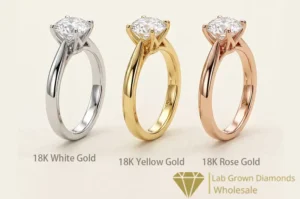
The summer period from June to August witnesses the prominent bridal season, a core demand pillar for the U.S. fine jewelry industry. A large number of American families arrange engagements and wedding ceremonies during the warm summer months, driving explosive demand for formal bridal jewelry including certified lab diamond engagement rings, wedding bands, bridesmaid gift jewelry, and customized wedding souvenir accessories. Different from festival gift jewelry with versatile styles, bridal jewelry features strict standards for stone cutting, metal purity, and structural stability, raising higher requirements for manufacturers’ professional production technology and standardized quality control systems.
Procurement Rhythm for American Fine Jewelry Buyers
From a manufacturer’s perspective, understanding the precise procurement rhythm of local buyers is more critical than grasping terminal retail trends, as it directly determines order volume, production scheduling, and delivery cycle arrangements. The procurement logic of U.S. fine jewelry buyers follows a clear rule: bulk procurement is completed 3 to 6 months ahead of retail sales peaks, reserving sufficient time for overseas production, quality inspection, sea freight, U.S. customs clearance, and offline store inventory deployment.
The primary annual procurement window opens from May to July, dedicated to stocking inventory for the year-end holiday retail peak. This is the most important order cycle for fine jewelry manufacturers, supporting large-batch, standardized, and customized high-end jewelry production. During this period, fine jewelry importer in usa and regional distributors concentrate on selecting new seasonal styles, confirming long-term cooperation frameworks, and placing bulk orders covering holiday gift series and classic luxury styles. Since high-end fine jewelry made of platinum, solid gold, and inlaid with high-quality colored gemstones requires 8 to 12 weeks of sophisticated production, plus cross-border transportation and customs clearance cycles, orders confirmed in May to July can fully meet the shelf deployment needs of U.S. retail stores before October. Manufacturers specializing in european style fine jewelry wholesale factory direct products gain prominent advantages in this period, as their minimalist, elegant, and high-texture European design styles perfectly match the aesthetic preferences of American high-end consumers for holiday gifts and daily luxury matching.
The second key procurement season runs from December to March of the following year, targeting spring festival markets and summer bridal market demands. After completing the year-end retail sales sprint and annual financial settlement, U.S. importers and distributors release new fiscal year procurement budgets, focusing on purchasing Valentine’s Day couple jewelry, Mother’s Day gift fine jewelry, and customized bridal jewelry for the upcoming summer wedding season. Orders in this cycle feature richer personalized customization demands and more diverse style requirements, testing manufacturers’ flexible production and rapid sample development capabilities. In addition to formal bulk orders, many small and medium-sized retail sellers also look for wholesale fashion jewelry sources for reselling during this period, supplementing mid-range fashionable fine jewelry inventory to enrich product line diversity and cover mass consumer groups.
The period from August to October belongs to the seasonal transition stage of U.S. fine jewelry procurement. At this stage, buyers basically stop placing new bulk customized orders and only carry out small-batch replenishment of hot-selling holiday styles and conventional basic models. For manufacturers, this stage is suitable for sorting out production processes, optimizing new product designs, and communicating with old customers on next year’s cooperation plans, rather than expanding new large-scale production lines. Grasping this phased procurement difference helps manufacturers avoid overcapacity and effectively control operational costs.
Diversified Jewelry Distribution Channels in the U.S. Market
The mature and layered jewelry distribution channels in the U.S. determine the differentiated product demands and order characteristics of downstream buyers, guiding manufacturers to carry out targeted product positioning and production capacity allocation. The U.S. fine jewelry market still takes offline channels as the core of high-end product sales, while online channels maintain rapid growth in mid-to-low-end and personalized jewelry segments, forming a complementary dual-channel pattern.
Offline independent jewelry stores are the largest sales carrier of high-end fine jewelry in the United States. Most of these stores are local family-run businesses with decades of operating history, stable customer groups, and high consumer trust. They focus on customized bridal jewelry, high-value gemstone inlaid fine jewelry, and personalized luxury accessories, with high customer unit prices and strict quality requirements. Such retailers rarely directly cooperate with overseas small and medium-sized manufacturers; they mostly purchase goods through professional American importers and distributors, focusing on stable quality, unique design, and authoritative product certification.
National chain jewelry stores and high-end department stores constitute the mainstream sales channels for mid-to-high-end standardized fine jewelry. Chain brands such as Kay Jewelers and Zales focus on mass-market fine jewelry with high cost performance and stable styles, requiring manufacturers to support standardized large-batch production and unified quality control. High-end department stores including Saks Fifth Avenue and Neiman Marcus set up special luxury jewelry zones, screening high-quality European and American style fine jewelry products, putting forward higher requirements for product appearance, craft fineness, and brand presentation. In addition, luxury boutiques and resort retail stores in tourist hotspots focus on lightweight luxury fine jewelry and vacation-style matching jewelry, with flexible order quantities and diverse style requirements.
Online sales channels are the fastest-growing segment of the U.S. jewelry market, mainly divided into professional vertical jewelry platforms and comprehensive social e-commerce platforms. Vertical DTC jewelry platforms such as Blue Nile and Brilliant Earth dominate online bridal jewelry sales, focusing on customized diamond rings and formal wedding jewelry, requiring manufacturers to support personalized parameter adjustment and fast customized production. E-commerce platforms and social commerce represented by Amazon, TikTok Shop, and Etsy are the main carriers of wholesale fashion jewelry sources for reselling, suitable for small-batch, multi-style, and fast-update fashion fine jewelry products, meeting the operational needs of individual resellers and small online stores.
Professional Trade Shows Driving Seasonal Order Cooperation
Fine jewelry trade shows are the core offline scenario for connecting overseas manufacturers and U.S. buyers, concentrating most annual procurement negotiations, new product launches, and long-term cooperation intention docking. These professional exhibitions have fixed holding cycles and clear market positioning, precisely matching the two major procurement windows of the U.S. fine jewelry industry, and are essential channels for manufacturers to develop American market customers.
JCK Las Vegas is recognized as the top luxury fine jewelry exhibition in North America and the core venue for annual large-batch order docking. Held annually from late May to early June, the exhibition perfectly coincides with the May-July peak procurement window for year-end holiday inventory. A large number of American high-end importers, chain brand purchasers, independent boutique buyers, and luxury brand operators gather here to select new seasonal products, evaluate manufacturer craftsmanship, and confirm annual bulk order plans. The exhibition’s luxury zone focuses on high-end customized bridal jewelry, colored gemstone fine jewelry, and European-style high-texture jewelry, becoming the best platform for manufacturers of european style fine jewelry wholesale factory direct products to expand high-quality American customers.
JA New York and JIS Miami are two important supplementary professional exhibitions in the U.S. fine jewelry industry, undertaking seasonal procurement demands in spring and autumn respectively. The spring session of JA New York is held in January to February, docking the spring gift and summer bridal jewelry procurement cycle, focusing on displaying lightweight luxury fine jewelry, couple matching series, and personalized customized products, suitable for manufacturers to launch seasonal new styles and develop small and medium-sized importer customers. The JIS Miami exhibition, held in March and October every year, leans towards vacation-style and fashionable fine jewelry, catering to the procurement needs of resort retail stores and online fashion jewelry resellers, with flexible order batches and diverse style requirements. The autumn sessions of the two exhibitions mainly undertake small-batch replenishment orders for holiday seasons, with fewer new large-batch customized orders, serving as a supplementary adjustment node for annual procurement.
Manufacturers can effectively distinguish themselves from homogeneous competitors, attract cooperation intentions from luxury jewelry brands and high-end retailers, and steadily expand market share in the U.S. bridal season and holiday gift markets. Combined with flexible supply of wholesale fashion jewelry sources for reselling and in-depth layout of diversified jewelry distribution channels, manufacturers can build a comprehensive and sustainable U.S. market operation system.