Many jewelers struggle to tell subtle quality gaps when sourcing bulk lab diamond tennis bracelets. It is easy to judge stones by clarity or carat weight, yet far trickier to evaluate craftsmanship of wholesale lab diamond tennis bracelets. Surface shine may look similar in product photos, but fabrication choices shape wear performance, long-term reliability and final retail value. Learning these distinctions helps you pick pieces that satisfy your end buyers and reduce costly after-sales repairs.
Differences in Fabrication Techniques
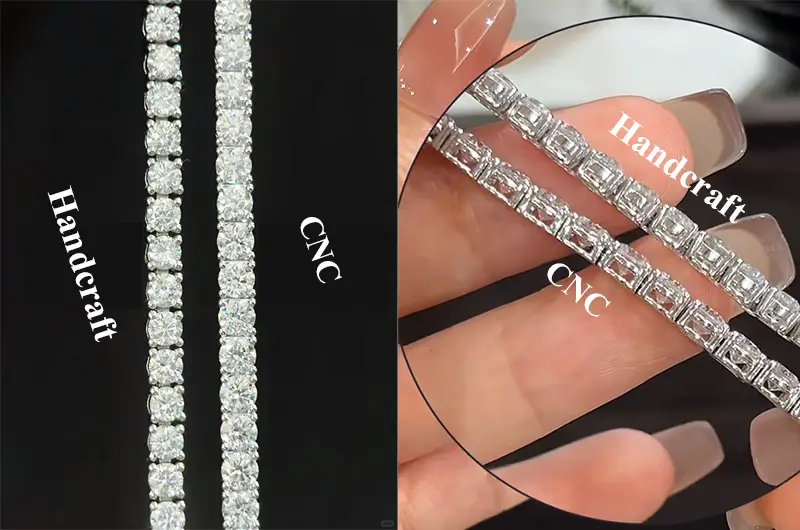
Traditional regular tennis bracelets rely on lost-wax casting to articulated chain blanks in batches. After casting, craftsmen manually trim, polish, adjust settings and solder each component together. Every link and stone seat gets refined by hand, which leaves room for slight dimensional variation across a single batch. Manual finishing depends heavily on individual operator skill, so consistency can fluctuate between separate runs.
CNC tennis bracelets take a completely different route. Each individual link and setting profile is milled directly from solid metal stock using computer numerical control equipment. Every stone cavity, prong geometry and cutout shape follows identical programmed measurements, holding tight tolerances before assembly and stone setting. The machining step removes most manual shaping work, leaving only final polishing and stone insertion for later process. This production method demands precisely calibrated matched melee stones, as inconsistent stone sizes will not fit the pre-machined seats.
Contrast of Appearance and Hands-on Sensation
At first glance, both styles deliver continuous line sparkle. Close inspection reveals how manufacturing methods change visual continuity. Cast links for regular tennis bracelets can shift slightly after assembly, creating uneven gaps between adjacent stones. Random dark seams break the uninterrupted light reflection, and chain alignment may bend or twist when laid flat. Edges leftover from hand finishing sometimes remain sharp enough to catch fabric or fine hair on wrist.
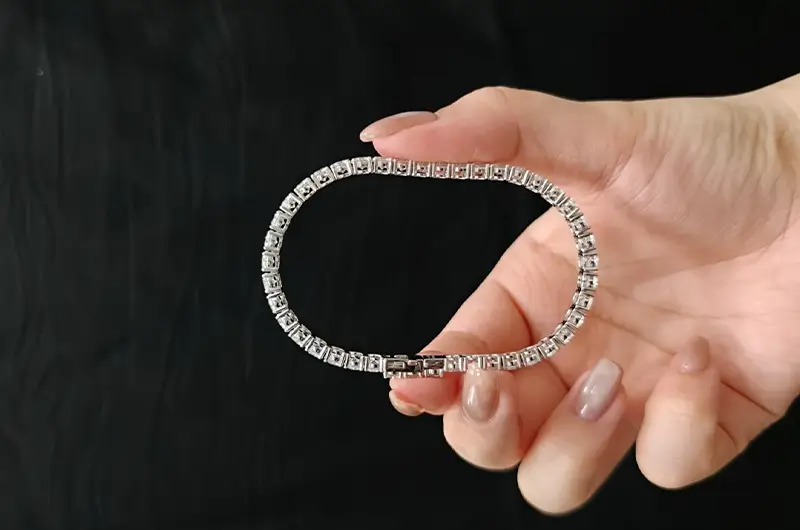
Links on CNC tennis bracelets maintain uniform spacing between stones. Prongs sit flush and evenly aligned, forming a seamless bright band of sparkle from one end of the bracelet to the clasp. The chain carries gentle structural rigidity while staying flexible enough for natural wrist movement. Its refined edges eliminate most snags. The balanced drape prevents unwanted flipping during daily wear, a common complaint reported by retail clients who purchase cast tennis bracelets.
Firmness and Durability
The stability of stone settings separates these two bracelet styles. Hand-finished settings on regular tennis bracelets may carry uneven prong pressure. Some prongs could bear more load than others after repeated wear, raising risks of loose stones and stone loss over time. Solder joints between cast links represent potential weak points; heavy daily use or accidental knocks may cause breakage at these connecting spots.
Settings milled for CNC tennis bracelets feature uniform prong angles and even load distribution across every stone. The integrated structure lowers chances of loosening melee stones under regular wear. Consistent link geometry reduces stress concentration at joints. While no tennis bracelet is fully indestructible, this construction cuts down return rates related to damaged settings or fractured links. This stronger build translates to happier retail customers and fewer warranty claims.
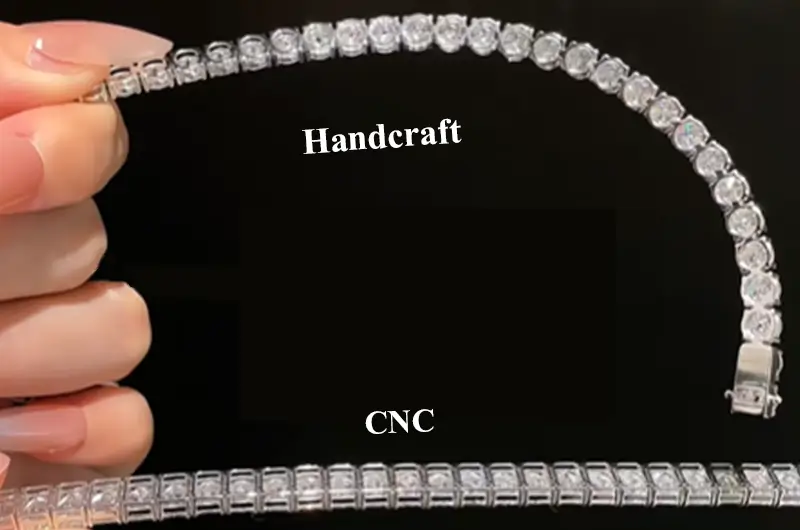
Make Choice Between Regular and CNC Tennis Bracelets
Your selection should match your target retail price tier and customer expectation. Regular tennis bracelets work well for entry-level retail lines and seasonal collections where buyers prioritize affordable sparkling styles. They support flexible order plans for quick inventory turnover, suitable for casual everyday wear and layered styling.
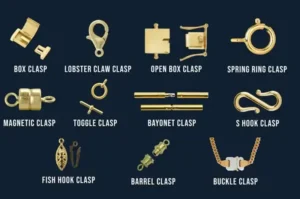
CNC tennis bracelets fit premium retail offerings, ideal for clients seeking smooth drape, consistent brilliance and long-lasting wearing. The higher production cost reflects tighter machining standards and stricter stone sorting requirements. Many retailers pair these premium bracelets with custom adjustments to fit brand aesthetic needs. You can refine metal finishes, stone sizes, stone colors and clasp types to craft exclusive pieces aligned with your brand identity.
Crafting personalized pieces opens fresh retail opportunities. You can explore custom jewelry inspired by evaluate craftsmanship of wholesale lab diamond tennis bracelets. Adjust stone layouts, modify surface finishes, select different carat sizes or tweak link width to build distinctive tennis bracelets tailored for your shoppers. These custom options help your store stand out from competitors selling generic mass-produced chains.
Speak with our team to explore how you can customize regular tennis bracelets or CNC tennis bracelets for your brand. Share your design preferences and order requirements, and we will help you create personalized brand-inspired tennis bracelets while you learn to evaluate craftsmanship of wholesale lab diamond tennis bracelets for your upcoming inventory release.