Modern jewelry manufacturing faces a core consumer demand shift: beyond aesthetic design and durability, skin safety has become a non-negotiable standard for high-quality wearable accessories. Millions of consumers worldwide suffer from metal contact dermatitis, triggered primarily by reactive metal ions that leach from low-grade alloy jewelry during daily wear. As a professional jewelry manufacturer focusing on premium wearable safety, we refine every production procedure to develop reliable, skin-friendly accessories, covering classic K gold, elegant rose gold, and high-end platinum series. This article systematically introduces our core hypoallergenic production technologies, material selection standards, and customized craftsmanship solutions, explaining how industrial-grade precision eliminates skin irritation risks while maintaining jewelry’s luster, texture, and long-term wear performance.
Consumer Demands for Hypoallergenic Wearable Accessories
Sensitive skin groups account for nearly 30% of mainstream consumers, and their critical purchasing criterion is selecting allergy safe jewelry that adapts to long-term daily wear. Traditional low-cost jewelry often adopts inferior alloy formulas containing nickel, cobalt, and other active metals. When contacting human sweat, sebum, and external humid environments, these metals oxidize and precipitate ions, causing skin redness, itching, and persistent inflammation. For bridal jewelry, daily fashion accessories, and long-worn fine jewelry, such allergic risks completely undermine product value and user experience.
Professional manufacturing-grade hypoallergenic design is not a simple surface treatment but a systematic engineering covering material formula optimization, bottom-layer electroplating modification, surface protection technology, and finished product testing. Our factory strictly abides by international wearable safety standards, abandoning outdated allergic production processes, and builds a full-link safety barrier from raw material input to finished product delivery, ensuring every piece of customized and mass-produced jewelry can safely adapt to all skin types.
The root cause of most jewelry allergies lies in unstable alloy components, so material formula optimization is the primary step of hypoallergenic craftsmanship. Our factory fully promotes Nickel‑free alloy formulas for all K gold and customized alloy jewelry. Different from ordinary commercial alloys that add nickel to reduce costs and increase hardness, our premium alloys use palladium, silver, and high-purity copper as stabilizing auxiliary components, matching pure gold raw materials in precise proportions to ensure both structural stability and skin-friendly performance.
For 18K gold and rose gold series products, we adopt standardized hypoallergenic ratio formulas. Pure gold with stable chemical properties serves as the main body, and matched non-reactive auxiliary metals avoid metal ion precipitation in humid and sweaty environments. This formula adjustment fundamentally solves the common problem of low-grade K gold jewelry causing skin sensitivity, making our hypoallergenic jewelry suitable for long-term close-fitting wear, even for users with extremely sensitive skin. Meanwhile, the optimized alloy formula does not damage the metal’s ductility and hardness, retaining the excellent molding performance required for complex jewelry designs, from simple plain rings to multi-layer hollow carvings and inlaid styles.
Professional Electroplating Technology for White Gold Jewelry
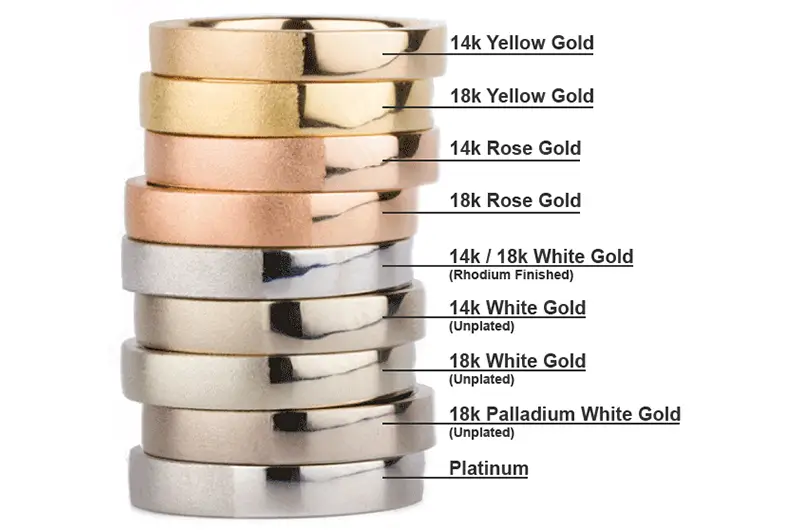
White gold jewelry is highly popular in the high-end market for its cool silver-white luster, but traditional white gold products are prone to allergic problems due to backward processing technology. To solve this industry pain point, we apply mature rhodium plating white gold craftsmanship in all white gold production lines. Rhodium, a rare and inert platinum group metal, features ultra-high corrosion resistance, oxidation resistance, and chemical stability. Electroplating a uniform and dense rhodium layer on the surface of white gold alloys can completely isolate the base alloy from contact with human skin and external air, blocking the precipitation of trace metal ions and achieving perfect hypoallergenic effects.
Different from thin and uneven ordinary electroplating, our factory adopts micron-level precise rhodium plating technology. Before formal electroplating, we conduct multiple processes of polishing, degreasing, and acid cleaning to remove all surface impurities and oxide layers of the base metal. The rhodium plating layer is controlled at a uniform thickness, which not only maintains the bright and pure white texture of white gold but also enhances the jewelry’s tarnish resistance and scratch resistance. Even after long-term daily wear, the plating layer is not easy to wear and fade, and the internal alloy will not contact the skin, permanently avoiding allergic reactions.
Advanced Bottom-Layer Craftsmanship: Palladium Plated Jewelry for Enhanced Stability
To further upgrade the hypoallergenic grade of high-end customized jewelry, we take the lead in applying palladium plated jewelry technology in the industry. As a core bottom-layer electroplating process for premium hypoallergenic jewelry, palladium plating replaces the traditional nickel bottom plating process that is prone to allergies. Palladium belongs to the platinum group inert metals, with stable chemical properties and no skin irritation. Using palladium as the bottom plating layer can tightly combine the surface rhodium plating and the base alloy, improving the adhesion of the surface plating layer while forming a secondary safety barrier.
This dual-layer protection technology of palladium bottom plating plus rhodium surface plating is mainly used in our high-end custom jewelry, bridal sets, and long-wear daily fine jewelry. Compared with single-layer electroplating, it effectively solves the problem of local plating layer peeling and wear caused by long-term friction, completely eliminating the hidden danger of allergies after the plating layer is damaged. For users who pursue extreme safety and long-term durability, palladium-plated hypoallergenic jewelry is the most ideal wearable solution, with stability far exceeding ordinary electroplated products on the market.
Platinum Craftsmanship: Inherent Hypoallergenic Advantages of Precious Metals
Among all mainstream jewelry precious metals, platinum has inherent skin-friendly advantages and is recognized as the safest material for sensitive skin. Our factory’s platinum hypoallergenic jewelry series adopts high-purity Pt950 and Pt900 standard raw materials, with no nickel, cobalt, or other reactive metal components added in the whole formula. Platinum itself has extremely strong chemical inertness, does not oxidize, corrode, or precipitate metal ions in any daily wear environment, and will not cause skin irritation or allergic reactions, achieving zero-allergy wear without relying on post-processing electroplating.
In platinum jewelry production, we focus on retaining the pure texture and stable performance of platinum while optimizing the forging and polishing process. Platinum has soft physical properties, so we adopt precise cold forging and compression molding technology to improve the metal density and structural hardness of platinum jewelry, solving the problem that pure platinum is easy to deform. Whether it is a simple platinum plain ring, a minimalist pendant, or an inlaid diamond platinum jewelry, our products maintain the inherent hypoallergenic characteristics of platinum, and are suitable for pregnant women, sensitive muscle groups, and long-term non-stop wear scenarios such as wedding rings.
Hypoallergenic Craftsmanship Application in Lab Grown Diamond Bridal Jewelry
Bridal jewelry represented by engagement rings and wedding bands requires long-term lifelong wear, so hypoallergenic performance and wearing comfort are core customization indicators. We perfectly integrate the above systematic hypoallergenic craftsmanship into lab manufactured diamond engagement rings production, creating high-safety bridal jewelry that combines aesthetics, durability and skin friendliness.
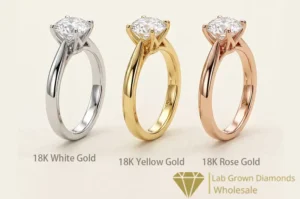
For lab-grown diamond engagement rings, we provide multiple hypoallergenic material solutions including nickel-free K gold, rose gold, and high-purity platinum. White gold styles adopt palladium bottom plating + rhodium surface plating dual protection technology, rose gold and yellow gold styles use fully optimized nickel-free alloy formulas, and platinum styles retain the original inert metal safety performance. All ring holders, contacts, and fitting parts that are in close contact with the skin strictly follow hypoallergenic production standards, with no dead-angle exposure of allergic alloys. Matched with high-quality lab-grown diamonds with excellent cut and clarity, our engagement rings not only have brilliant visual effects but also meet the long-term safe wearing needs of newlyweds, becoming a high-quality choice for global bridal jewelry customization.
Strict Factory Testing and Quality Control Standards
As a professional jewelry manufacturer, we understand that hypoallergenic performance is a rigid quality standard, not a superficial marketing concept. We have established a complete set of factory testing processes for all hypoallergenic jewelry products. Each batch of raw alloy materials will undergo component detection to ensure zero nickel content in compliance with international standards. Finished electroplated products will pass friction durability tests, sweat corrosion simulation tests, and skin safety simulation tests to verify the stability of the hypoallergenic barrier.
All products are strictly prohibited from using any allergic auxiliary materials in the production process. From material proportioning, mold opening, inlaying, polishing to electroplating and finished product packaging, every link implements standardized operation procedures. We abandon all low-cost and allergic backward processes, and take skin safety as the primary assessment index of product quality. This strict quality control system ensures that every piece of factory-delivered hypoallergenic jewelry has stable and reliable safety performance, and can meet the long-term wearing needs of different skin types.
The value of our hypoallergenic jewelry craftsmanship lies in solving the industry’s common pain points from the source, through material formula innovation and process upgrading. Nickel-free alloy foundation, professional rhodium plating white gold technology, high-stability palladium plated craftsmanship, and inherent safe platinum materials together form our systematic hypoallergenic manufacturing system. Combined with the customized production advantages of lab manufactured diamond engagement rings, we provide global buyers and brand customers with high-quality, safe, and durable fine jewelry solutions.