Gold purity has a direct impact on pricing of lab grown diamond jewelry wholesale. Customer satisfaction, market competitiveness and long-term investment returns of jewelry importers, retailers, dealers and distributors are subject to the impact of gold purity. Wholesale partners ought to sync inventory with market demands.
What Is Gold Purity?
Gold purity refers to the proportion of pure gold in an alloy, expressed in karats(K) or parts per thousand (millesimal fineness). The remaining composition integrates alloys like copper, silver, palladium, or zinc for targeted hardness and color. Pure gold is not an ideal choice for most jewelry requires durable settings to secure stones. Besides, gold purity also determines jewelry positioning as high purity carries connotations of luxury, tradition and intrinsic value.
Common Gold Purity Types & Percentage Breakdown
9K Gold
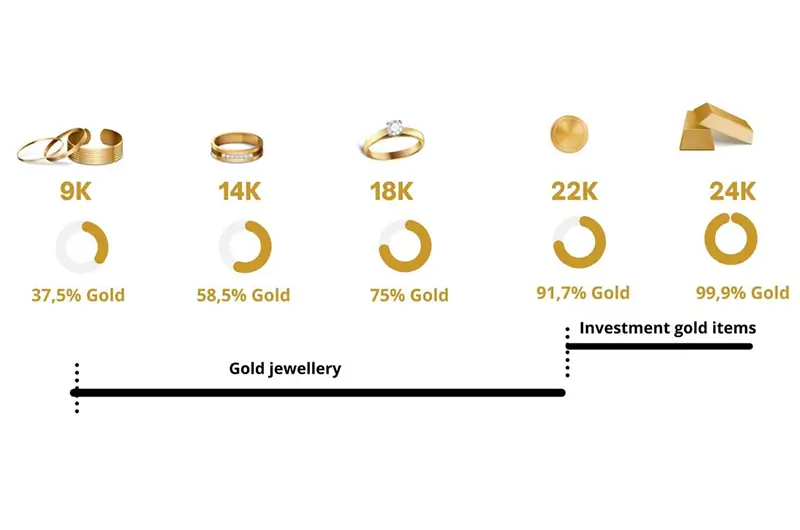
- Purity Percentage: 37.5% pure gold (375 parts per thousand)
- Key Characteristics: The lowest purity widely recognized in international wholesale markets, 9k gold is highly durable due to its high alloy content. It has a paler gold hue compared to higher karats and offers excellent resistance to scratches and tarnish—ideal for everyday-wear lab grown diamond jewelry like studs, delicate necklaces, or stackable rings.
- Wholesale Applications: Popular in budget-friendly collections, fast-fashion jewelry lines, or markets where affordability is a top priority (e.g., youth-oriented brands). Pairs well with small lab grown diamonds for accessible luxury pieces.
10K Gold
- Purity Percentage: 41.7% pure gold (417 parts per thousand)
- Key Characteristics: Slightly higher in gold content than 9k, 10k gold retains strong durability while offering a warmer tone. It meets the minimum purity standard for “gold” in many countries (including the U.S.). It balances cost-effectiveness with decent aesthetic appeal.
- Wholesale Applications: Versatile for mid-range lab grown diamond jewelry—from casual bracelets to bridal party gifts. Ideal for retailers targeting price-sensitive consumers who still want genuine gold settings for their lab grown diamonds.
14K Gold
- Purity Percentage: 58.3% pure gold (585 parts per thousand)
- Key Characteristics: The most popular gold purity in global wholesale markets, 14k gold strikes a perfect balance between purity, durability, and color. Its alloy composition (41.7% metals) makes it resistant to daily wear and tear, while its rich gold tone complements lab grown diamonds of all cuts and clarities. It offers excellent value for money, retaining resale appeal.
- Wholesale Applications: A staple for jewelry paired with lab grown diamonds, as well as core fashion collections. Appeals to a broad customer base, from luxury shoppers to everyday buyers, making it a low-risk wholesale investment.
18K Gold
- Purity Percentage: 75% pure gold (750 parts per thousand)
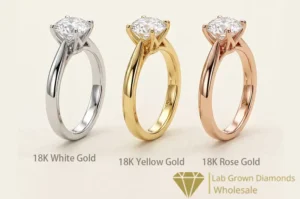
- Key Characteristics: A symbol of luxury, 18k gold boasts a vibrant, warm hue that enhances the brilliance of lab grown diamonds. It is softer than 14k but still durable enough for fine jewelry, with a higher gold content that elevates the perceived value of the piece. Alloy metals (25%) are often premium (e.g., palladium for white gold), adding to its quality.
- Wholesale Applications: Perfect for high-end lab grown diamond bridal sets, statement necklaces, and luxury collections. Popular in markets where consumers prioritize purity and prestige (e.g., European, Middle Eastern, and Asian luxury segments).
22K Gold
- Purity Percentage: 91.7% pure gold (917 parts per thousand)
- Key Characteristics: Extremely high in pure gold content, 22k gold has a rich, deep yellow hue that is highly sought after in traditional and cultural jewelry. It is softer than lower karats, making it less suitable for intricate settings or daily wear but ideal for bold, classic designs.
- Wholesale Applications: A top choice for cultural jewelry (e.g., Indian, Pakistani, and Middle Eastern jewelry sets) paired with lab grown diamonds. Popular in wholesale markets catering to traditional celebrations, where gold purity is a symbol of prosperity and heritage.
24K Gold
- Purity Percentage: 99.9% pure gold (999 parts per thousand)
- Key Characteristics: The purest form of gold available, 24k gold has an intense, luminous yellow color. However, its extreme softness and malleability make it impractical for most lab grown diamond settings—stones are likely to loosen over time, and the metal is prone to scratches and dents.
- Wholesale Applications: Rarely used for set lab grown diamond jewelry; more common in investment pieces (e.g., bars, coins) or decorative jewelry without gemstones. Some niche wholesale markets may offer 24k gold lab grown diamond pieces for collectors, but it is not recommended for everyday or bridal use.
IV. Gold Purity Markings & Hallmarks
In lab grown diamond jewelry wholesale, gold purity markings (hallmarks) are non-negotiable—they serve as a guarantee of quality, compliance with international standards, and transparency for retailers and end consumers. Understanding these marks is critical for wholesale buyers to avoid counterfeits and ensure product integrity.
Standard Hallmarks
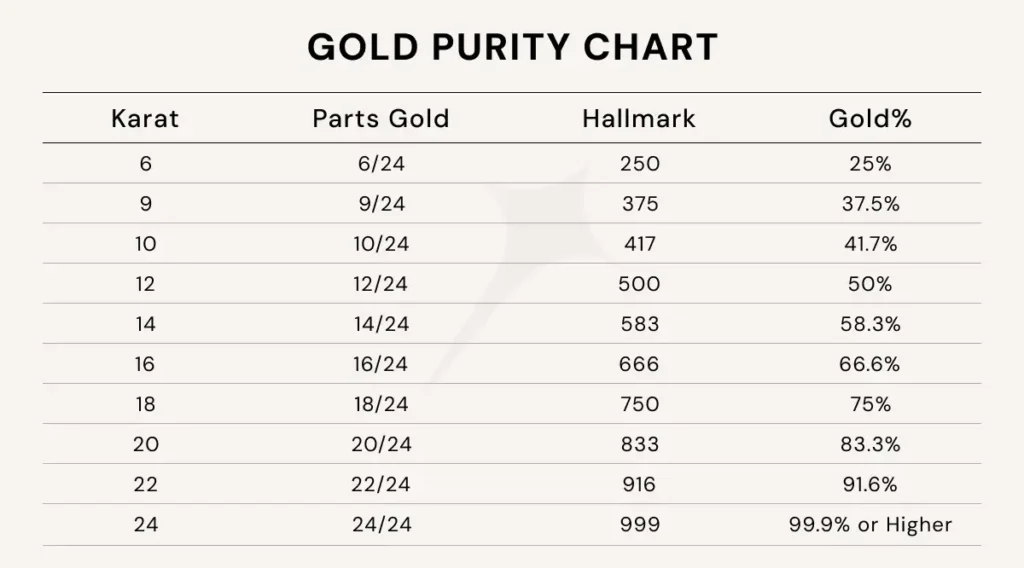
- Karat Stamps: The most common marking, denoted as “K” or “KT” (e.g., 9K, 10KT, 14K, 18K, 22K, 24K). In Europe and many global markets, fineness numbers are used alongside or instead of karats (e.g., 375 for 9K, 417 for 10K, 585 for 14K, 750 for 18K, 917 for 22K, 999 for 24K).
- Country/Regional Marks: Many countries require hallmarks indicating the place of origin or assay (e.g., the UK’s lion passant, Italy’s “750” for 18K, the U.S.’s “14K” with a manufacturer’s stamp).
- Manufacturer/Brand Stamps: A unique logo or code from the producer, helping wholesale buyers trace the source of the jewelry—critical for quality control and warranty claims.
How to Read Hallmarks in Wholesale
- Location: Marks are typically found on the inner band of rings, the back of pendants, or the clasp of necklaces/bracelets. For lab grown diamond settings, they may be on the setting’s base or side.
- Verification: Wholesale buyers should cross-check karat stamps with fineness numbers (e.g., 18K should match 750) to confirm authenticity. Avoid pieces with blurred or missing marks, as they may be counterfeit.
- Global Variations: Familiarize yourself with regional standards—for example, the EU’s Hallmarking Directive requires 3 marks (purity, assay office, manufacturer), while the U.S. does not mandate assay marks but requires karat disclosure for jewelry sold as gold.
Fake vs. Real Hallmarks
- Red Flags: Faint or uneven stamping, incorrect fineness-karat matches (e.g., 14K marked as 750), or marks that rub off easily.
- Wholesale Verification Tips: For bulk orders, request certification from reputable assay offices (e.g., GIA, BIS, or local national assay boards) to confirm gold purity. Use a magnet test (real gold is non-magnetic) as a preliminary check, but rely on professional testing for final validation.
Golden Lab Diamond Jewelry & Recommended Purity
When pairing lab grown diamonds with gold in wholesale jewelry, the choice of gold purity depends on three key factors: the intended use (bridal vs. fashion), target market (luxury vs. budget), and design complexity (intricate settings vs. bold styles). Below are tailored recommendations for wholesale professionals:
Bridal Lab Grown Diamond Jewelry
- Top Recommendations: 14K and 18K gold. 14K offers the ideal balance of durability and value—perfect for bridal sets that will be worn daily (e.g., engagement rings, wedding bands). 18K caters to luxury bridal markets, where the higher gold content enhances the piece’s elegance and symbolic value. For cultural bridal jewelry (e.g., Indian weddings), 22K gold is preferred for its traditional significance and rich color, paired with lab grown diamonds in bold, ornate settings.
- Why These Choices: Bridal jewelry requires longevity—14K and 18K resist scratches and stone loosening, while 22K meets cultural expectations. Lab grown diamonds’ brilliance pairs seamlessly with these purities: 18K’s warm tone amplifies the diamond’s fire, while 14K’s neutral hue lets the stone take center stage.
Fashion & Everyday Lab Grown Diamond Jewelry
- Top Recommendations: 9K, 10K, and 14K gold. 9K and 10K are ideal for affordable, trend-driven pieces (e.g., dainty lab grown diamond earrings, layered necklaces) that appeal to younger consumers. 14K remains a versatile option for mid-range fashion collections, offering broader market appeal.
- Why These Choices: Lower karats prioritize durability for daily wear, while 14K balances quality and cost. These purities allow wholesale buyers to price lab grown diamond jewelry competitively without compromising on perceived value.
High-End Luxury Lab Grown Diamond Jewelry
- Top Recommendation: 18K gold. Its high purity and premium alloy metals (e.g., palladium for white gold) align with luxury branding, making it the gold standard for high-value lab grown diamond pieces (e.g., statement necklaces, cocktail rings with large lab grown diamonds).
- Why This Choice: Luxury consumers associate 18K gold with exclusivity and quality, which complements the ethical and sustainable appeal of lab grown diamonds. The purity enhances the jewelry’s resale value, a key consideration for high-end buyers.
Gold Purity Market Trends & Buying Tips
Current Market Trends (2026)
- Sustainable Luxury: Consumers are increasingly linking gold purity to ethical sourcing. High-purity 18K gold (paired with lab grown diamonds) is trending in luxury wholesale markets, as it signals both quality and a commitment to sustainable jewelry (lab grown diamonds have a lower carbon footprint, and high-purity gold often comes from responsible mines).
- Cultural Fusion: 22K gold lab grown diamond bridal sets are gaining traction in global markets, driven by the popularity of cultural weddings and the desire for traditional yet modern pieces. Wholesale buyers targeting diverse communities should prioritize 22K options in their inventory.
- Durability-First Designs: 14K gold remains the bestseller in mainstream lab grown diamond wholesale, as post-pandemic consumers prioritize long-lasting, versatile pieces that offer value for money.
- Color Gold Variations: Rose gold (typically 14K or 18K, alloyed with copper) is a top trend for bridal and fashion lab grown diamond jewelry, with its warm tone complementing all skin tones and diamond cuts.
Wholesale Buying Tips for Gold Purity
For Jewelry Retailers, Importers, & Resellers
- Align with Target Market:
- Luxury retailers: Stock 18K gold lab grown diamond bridal sets and statement pieces.
- Mid-range brands: Focus on 14K gold for versatile, best-selling designs.
- Budget or cultural markets: Prioritize 10K, 9K, and 22K gold options.
- Verify Supplier Credentials: Work only with lab grown diamond jewelry wholesalers who provide assay certificates, hallmark verification, and transparent sourcing documentation for gold. Request samples to test gold purity before placing bulk orders.
- Balance Inventory: Avoid overstocking high-purity (22K, 18K) pieces unless there is proven demand. Maintain a core inventory of 14K gold lab grown diamond jewelry, with seasonal additions of trend-driven purities (e.g., 18K rose gold for bridal seasons).
- Consider Alloy Quality: For white gold (common in lab grown diamond settings), opt for 14K or 18K gold alloyed with palladium (not nickel) to avoid skin irritation—this is a key selling point for retailers, especially in bridal markets.
- Leverage Trends: Capitalize on 2026 trends by pairing 18K gold with large lab grown diamonds for luxury collections, or 22K gold with colored lab grown diamonds for cultural bridal lines.
Quick Selection Rules
- Daily Wear: 9K, 10K, or 14K gold (durability > pure gold content).
- Bridal Jewelry: 14K (mainstream), 18K (luxury), or 22K (cultural).
- High-Value Lab Grown Diamonds: 18K gold (secures stones and enhances value).
- Budget-Conscious Markets: 9K or 10K gold (affordable without sacrificing gold authenticity).
- Cultural Celebrations: 22K gold (traditional significance and prestige).
Gold purity is a make-or-break factor in lab grown diamond jewelry wholesale, influencing everything from product quality and pricing to customer trust and market relevance. Whether catering to luxury bridal shoppers, budget-conscious consumers, or cultural communities, the key is to balance gold purity with practicality: 14K and 18K gold remain safe, versatile choices for most wholesale portfolios, while 22K, 10K, and 9K gold serve niche or trend-driven demands.