Engagement rings witness significant moments of new couples and they intend to find ethical engagement ring companies. Therefore, more jewelry brands, independent jewelers and even custom ateliers try to source conflict-free diamonds from manufacturer. Wholesale lab grown diamonds & jewelry are top options for most wholesale buyers who would like to craft ethical and conflict-free jewelry lines.
Current Sales Data and Purchasing Habits
9 in 10 proposals occurred with a ring in hand. New couples spend $5000 on engagement rings on average in 2025 and over 85% couples prefer customized engagement rings as a way of love story telling. More 60% engagement rings are set with lab grown center stones and the trend will continue grow in following years. Affordable lab-grown pricing pushed average size up to 1.9ct without increasing average spend.
Obvious price declines happened in bigger stones from 1.5~3ct while wholesale prices of 1ct rounds are firming and increased 1% in the quarter instead. Although wholesale prices of polished loose lab grown diamonds are declining, prices for rough stones increased slightly for prices rising from Chinese manufacturers and U.S.-based Diamond Foundry by at least 30%.
In addition to above sales data, searching engine trend and data weighs too in sourcing plan making. Search volume peaks for 3ct lab diamonds, trailed by 2ct, then 1ct. Primary reason may lie in that lab-grown diamonds make a bold 3ct statement size achievable with a budget that once could only buy a 1ct natural diamond.
In other words, a wise sourcing portfolio is formed on the basis of sales data, searching volume and historical records of individual jewelers. All data here are helpful for lab diamond jewelry dealers, distributors and independent jewelers in optimizing source or procurement plan and lowering risks of inventory stagnation.
Qualified Center Stones of Engagement Rings
Different from occasional jewelry, an engagement ring is put on in the morning and taken off at night in general, going through dish-washing, gym sessions and even hand brushes. All wearing habits should be taken into consideration in selecting center stones of engagement rings rather than driven by any single factor.
Durability is closely related to lab diamond shape itself. Round brilliants, cushions and ovals are more durable than those with exposed points or corners for distributed impact around a curved or round silhouette. Fancy shapes with vulnerable corners or points require protective metalwork like v-prong or refined bezel to buffer impacts and prevent risks of chipping and cracking.
Clarity is the less important factor second to durability but ranks ahead of face-up visibility. One loose lab diamond with lower clarity shows zero impacts on wearing over decades. But a lab diamond with obvious visible inclusions under table facets, especially in step cuts like emerald and Asscher cuts camouflage nothing, will be phased out by clients after zoom-in observation. That means cleaner step-cut lab diamonds are needed for their optical and physical attributes. Minor inclusions under table facets of round, oval, cushion, radiant and princess cuts could be hide for their geometry structure and light refraction. More attentions are centered on sparkle, scintillation and brilliance.
Symmetry and proportion are determined factors of perceived carat weight. In other words, two stones at same carat weight may looks as or larger than actual weight on certificates. Popular proportions are recommended in sourcing for bridal lines.
High-Turnover Shapes and Carat Range
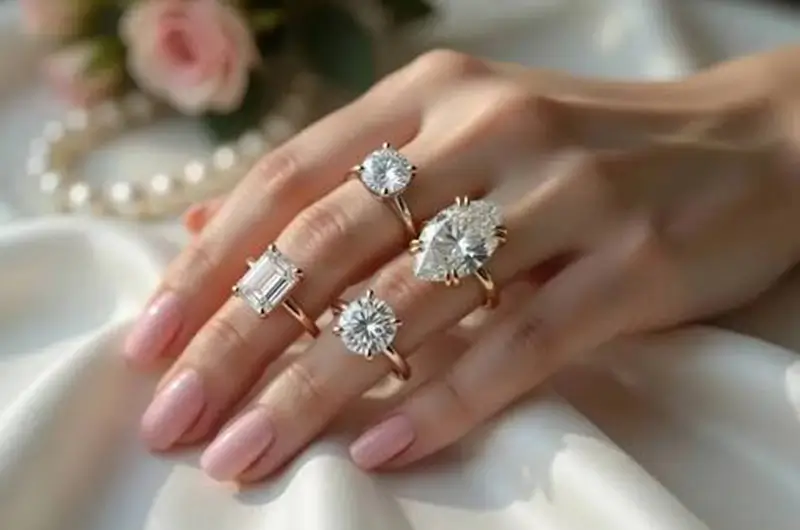
Round brilliant is the top-selling cuts in engagement rings, also the versatile shapes matching with most accents and settings. 1ct ~ 2.5ct round center stones are sought after among retailers for their growing demands and sensible carat weight.
Oval cuts are the second popular fancy shapes after round brilliants for larger face-up than round cuts of the same carat weight. Featured oval centers, ranging from 1.5ct to 3ct, of engagement rings are often pair with half-moon and tapered baguette side stones.
Round corners of cushion cuts and symmetrical facets hide most inclusions and flatter a wide range of finger shapes. Cushion center stones within 1.5~3ct go well with solitaire, vintage and modern minimalist design.
Radiant stones are cut with brilliant facets and rectangular shapes. Its structure lower requests on clarity grade. Emerald cut in 1.5~3.5ct grows to one option of engagement center stones in the past seasons. In addition, pear and princess are secondary options across most bridal assortments.
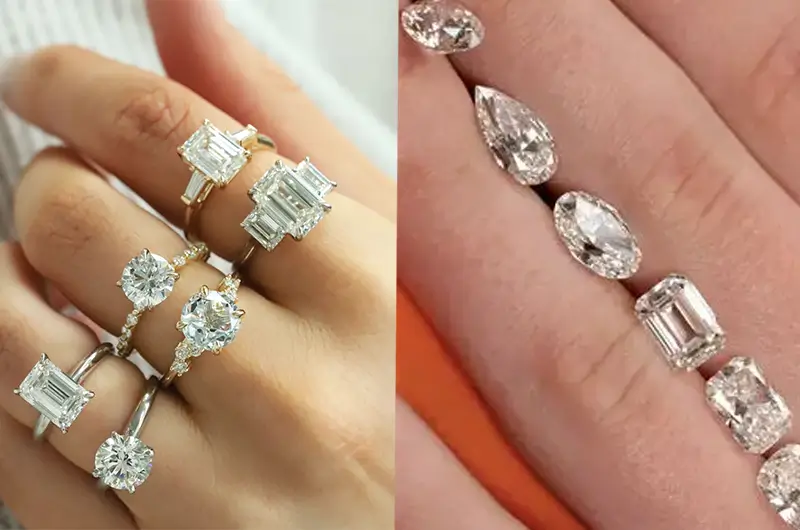
Popular Engagement Ring Settings: Solitaire>Halo>Three Stone> Pavé and Hidden-halo
Settings chosen by clients indicates their tastes to a certain extent. It’s essential for independent jewelers to consider which setting they will go into in advance, preventing mismatched inventory and capital tie-up over long term.
Solitaire settings refer to one single main stone is held by metalwork like four prongs, six prongs, bezel, etc. The main stone goes through strict review in cuts, proportions, clarity and color for nothing else distractors. Even a minor variance or off-proportion could be spotted easily here.
Halo settings are featured with a center stone surrounded by melees in typical, creating bigger perceived size and brilliance. A perfect option for clientele who seek larger visual footprint with tight budget. Cushions and ovals integrate with curves of halo seamlessly while emerald-cut halo requires straight lines and sophisticate craftsmanship for even setting.
Three-stone settings complement well with round, oval, cushion and emerald center stones. And matched accent stones like half-moons, trapezoids, or tapered baguettes are available for retailers easily.
Pave or hidden halos are often presented as melees running along the shank or below center stones. It’s another way for clients who seek optimized visual effects without upgraded costs on center stones.
Tiered Inventory Strategy for Bridal Rings
A bridal case that stocks only one price tier loses sales at both ends. The entry tier should carry round and princess centers from 1.00 to 1.50 carats in a commercial clarity range, priced so a first-time buyer can say yes without over-explaining the report; this tier moves the highest volume, sells same-visit, and should be the deepest owned stock. The mid-tier is where oval and cushion centers from 1.50 to 2.50 carats do the most work; carry enough shape and carat variety here that a client can compare three or four real stones side by side rather than one stone and a certificate photo. The upper tier — emerald and larger ovals or cushions above 2.50 carats — sells in lower volume at higher margin per piece and is best handled through memo rather than owned stock. Tying up credit in a deep bench of three-carat-plus emeralds that may sit for months is a worse use of capital than pulling options on memo the moment a qualified client walks in. A tiered model also protects cash flow: fast-moving entry stock generates the turnover that funds the slower, higher-margin memo program, and a supplier that can cover all three tiers from one source keeps your assortment consistent without extra freight or customs exposure.
Recommended Lab Documentation for Wholesale Lab Diamond Center Stones
Wholesale loose lab grown diamonds are totally different from wholesale natural stones. IGI certificate is accepted by almost all jewelers in wholesale or bulk purchasing, serving as the most common standard in lab grown diamond trade. In addition, it’s taken as a perfect balance between cost and credibility.
Main Sourcing Channels for Wholesale Engagement Rings and Center Stones
Wholesale buyers source lab-grown bridal inventory through four main routes:
Trade-only diamond platforms list loose certified centers from global dealers and suit buyers who set locally or send stones to a separate setting factory; they offer the deepest selection but leave you managing two suppliers per ring.
Domestic bridal wholesalers provide fast local fulfilment, domestic hallmarking and ready mountings, which suits brick-and-mortar jewelers who want stock on hand, though unit costs run higher.
Overseas manufacturing hubs — the Guangzhou-Panyu cluster for gold setting and finishing, Surat for lab-grown diamond cutting, and Wuzhou for moissanite and CZ — deliver the lowest landed cost for finished rings and private-label programs, with sample lead times of three to seven working days and bulk production of seven to fifteen days. Online marketplace platforms work for small buyers testing a first order but add platform fees and less direct quality control.
Trade shows such as JCK Las Vegas and the Hong Kong Jewellery & Gem Fair remain the best places for in-person light-performance checks and long-term partnership building. Whatever the channel, the same rule applies: verify the certificate, order a sample, and audit the batch against a written spec sheet before committing capital.
Every wholesale program starts with the same three questions: where the stones come from, what the certificate proves, and whether the factory can repeat the quality at scale. Reach out now if you have any question.