Lab diamond jewelry is a high potential industry worthy of diving in, also a chance to drive profit increasing. Even professional industry report serves as evidence for this trend, which is driven by driven by rising consumer awareness of ethical consumption, sustainable fashion concepts, and the cost advantages of man-made diamonds. To stand out in the crowded luxury accessory market, in-depth competitor analysis and precise differentiated positioning are essential foundational steps for new entrepreneurs. Figure out consumers’ concerns to engineer your own competitive edges.
Brand and Business Planning
Sound brand positioning and clear business planning determine the long-term development potential of a lab diamond jewelry business. The first core decision for entrepreneurs is confirming a suitable business operation model that matches startup capital, resource reserves, and target market characteristics. Three mainstream models are available for selection: pure online operation, offline physical store operation, and online-offline hybrid mode.
Pure online models feature low startup costs and flexible operation, making them ideal for novice entrepreneurs to test the market. Offline boutique stores provide immersive experience and face-to-face customized services, suitable for brands targeting high-end consumer groups. The hybrid mode integrates online traffic drainage and offline experience conversion, becoming the mainstream development trend of modern jewelry brands.
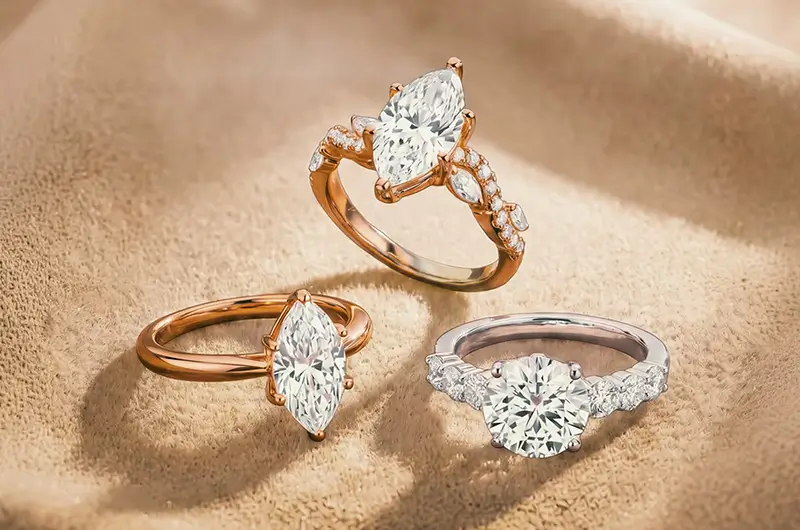
New lab diamond startups can cover diverse styles including daily wear, bridal ornaments, and hip-hop jewelry to meet the personalized aesthetic needs of different age groups and consumer groups. Daily wear products focus on simplicity, lightness and cost performance, suitable for young consumers’ daily matching; bridal series emphasizes exquisiteness, ceremony sense and high certification credibility, catering to wedding and engagement market demands; hip-hop style designs adopt bold shapes and inlay techniques to capture trend-focused young groups.
Professional Supply Chain Management and Supplier Selection
Mature industrial agglomerations of fine jewelry simplify and smooth the whole procurement workflows, and reduce cost and lower risks of most quality problems. Take China as an example, the country supplied over 50% lab grown diamonds and related jewelry to the global market. Guangzhou’s Panyu district brings together a wide array of jewelry suppliers capable of serving different family‑owned jewelry operators. Such industrial clustering reduces overhead in communication, raw material costs, processing fees and improves overall jewelry supply efficiency, being an ideal option for overseas jewelry importers, resellers and distributors.
Scientific supplier evaluation cannot rely solely on price advantage. Entrepreneurs need to conduct comprehensive multi-dimensional comparison of different vendors, covering pricing system, logistics efficiency, tariff standards, order lead time, after sale policy and whole-process quality control level. Reasonable pricing ensures profit margins, efficient logistics shortens order delivery cycles, standardized tariff rules avoid cross-border cost risks, flexible after-sales policies reduce user complaint rates, and strict quality control guarantees consistent product quality.
Legal and Platform Compliance Management
Standardized compliance operation is the bottom line for the long-term survival of lab diamond jewelry businesses, covering offline physical operation specifications and online platform rule compliance.
Offline entrepreneurs must complete formal business registration and standardized tax filing procedures in accordance with local industry supervision regulations to ensure legal business qualifications. In terms of product management, it is necessary to standardize product labeling, mark lab-grown diamond attributes to eliminate consumer misleading risks. In addition, brand trademark and original design intellectual property should be protected to maintain brand reputation and long-term profits.
Online compliance has become an indispensable part of business operation. All startups need to fully understand the restrictive rules and operating specifications of mainstream trading platforms. Mainstream e- commerce platforms such as Amazon and eBay have clear regulations on lab diamond product certification, labeling words, picture specifications and after-sales service standards. Different platforms have unique rules on product shelf audit, keyword setting and dispute handling. Only by fully adapting to platform compliance requirements can brands avoid store closure, product removal and penalty risks, ensuring stable online sales operation.
Multi-channel Sales and Integrated Marketing
Diversified sales channel layout and systematic marketing promotion are all driving forces for business growth. Mature lab diamond jewelry brands will deploy multi-channel sales systems covering online e-commerce platforms, social media channels and optional offline physical scenarios. Online channels rely on mainstream shopping platforms, independent official websites and social shopping entrances to achieve nationwide and even global customer coverage with low marginal costs. Offline channels such as experience stores and brand counters can provide users with physical trial wear, one-on-one consultation and customized communication services, enhancing user consumption experience and trust.
Integrated marketing strategies include content marketing, influencer cooperation and regular promotional activities. Integrated multi-channel marketing is effective in winning customer trust and eliminating concerns. Therefore, all traffic from online and offline could be converted to sales to the greatest extent.
Scientific Pricing and Diversified Profit Management
Reasonable pricing strategy and diversified profit structure determine the profitability and market competitiveness of jewelry enterprises. Many novice sellers blindly pursue low-price sales or excessive premium, resulting in poor sales or low profit margins. Therefore, building a scientific pricing system based on full cost accounting is essential. Enterprises should take all operating costs into consideration, including but not limited to raw material cost, processing and production cost, platform operation fee, marketing promotion expense, labor cost and logistics after-sales cost.
Diversified profit modes are another indicator of healthy brand development. In addition to traditional fine jewelry retail, OEM & ODM jewelry services are new drivers, including exclusive design, stone upgrading, pattern carving and size adjustment, which can bring high value-added income.
Full-Cycle Customer Operation and Reputation Building
Customer experience and brand word-of-mouth are intangible assets of jewelry enterprises, especially for emerging lab diamond brands that need to quickly open the market. A full-process service system involving pre-sales, in-sales and after-sales links can improve user consumption experience and satisfaction. Meanwhile, brands need to establish a complete user feedback mechanism, collect users’ evaluation and suggestions on product design, workmanship, packaging and service, and continuously optimize products and service systems according to real user needs.
Startup Risk Control and Stable Operation Strategies
The lab diamond jewelry industry has low startup thresholds but obvious market risks. For novice entrepreneurs, scientific risk control is the key to avoiding startup failure and achieving stable operation.
Inventory risk is the biggest operational risk for new brands. Excessive initial inventory will occupy a large amount of working capital, lead to capital turnover pressure, and easily cause product backlog and depreciation losses due to style updates and market trend changes.
Supplier risk is another core risk that cannot be ignored. Unstable supplier quality, delayed delivery and imperfect after-sales policies will directly affect product quality and user experience. To avoid single supplier dependence and supply chain fluctuations, startups must test and screen at least 3 to 5 professional lab diamond jewelry suppliers in the early stage. Through long-term sample testing, order trial cooperation and multi-dimensional strength investigation, screen out suppliers with stable quality, reasonable price, efficient service and strong comprehensive strength, and establish alternative supplier resources.
Insisting on differentiated positioning and refined operation can effectively cope with market changes. At the same time, standardizing product publicity and certification display can eliminate consumer doubts about lab diamond quality, avoid false public opinion dissemination, and maintain a good brand market image.
All above content consider most aspects before start your own jewelry businesses. Launching a lab diamond jewelry venture calls for balanced decisions across competitor positioning, supply‑chain sourcing, compliance rules and customer‑centric operation. No single strategy guarantees instant success, yet thorough preparation helps new brands mitigate avoidable risks and lay solid groundwork for steady long‑term growth.