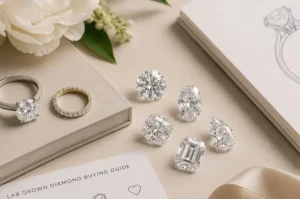
Modern lab grown sapphires can replicate or even exceed the visual purity and optical performance of natural stones, but their final quality, appearance, and wholesale value heavily depend on their manufacturing technology. Three mainstream production methods dominate the industry including Flame Fusion, Flux Grown, and Kyropoulos sapphire growth processes. Each technique delivers unique crystal characteristics, visual features, and pricing levels, making professional process differentiation a core skill for wholesale buyers.
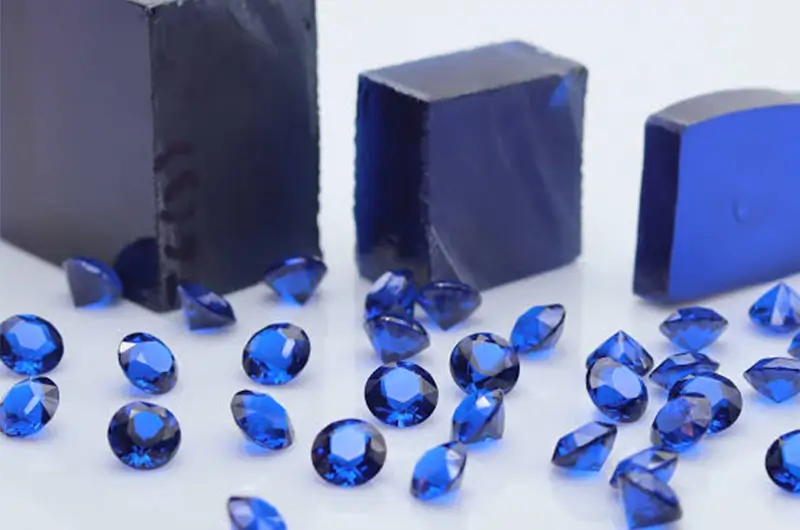
Three Main Lab-Grown Sapphire Manufacturing Processes
Flame Fusion Sapphire
Flame fusion sapphire is the most widely produced and commercially mature lab grown sapphire in the global wholesale market, also commonly known as the Verneuil method. This manufacturing process relies on high temperature oxyhydrogen flames to melt high purity alumina powder, which falls in molten droplets and gradually crystallizes into complete sapphire boules on a rotating support base. The entire growth cycle only takes several hours to a few days, supporting fully automated continuous production and extremely high output. Compared with other techniques, flame fusion sapphire features the lowest production cost and the most stable supply capacity, which explains its dominant position in mass fashion jewelry wholesale. Although stones created via flame fusion achieve standard commercial clarity and uniform color, they inevitably carry subtle internal growth traces including curved striae and minor internal stress formed during rapid crystallization. These tiny structural features make flame fusion sapphire easy to distinguish under professional gemological observation and limit its application in high end collector grade jewelry.
Flux Grown Sapphire
Flux grown sapphire represents the high end simulation technology for natural sapphire formation, and the complete flux grown sapphire process closely replicates the slow mineral growth environment of natural sapphires underground. Instead of direct high temperature melting, alumina raw materials dissolve steadily inside high temperature chemical flux solvents under constant temperature and pressure conditions. Sapphire crystals grow slowly and stably over several weeks or even months, eliminating the rapid crystallization stress found in flame fusion products. The flux grown sapphire process produces stones with extremely low internal stress, minimal inclusions, and multi layered color saturation identical to premium natural sapphires. Unlike the flat artificial tone of flame fusion sapphires, flux grown sapphires deliver vivid, deep, and natural color gradients that are highly favored by fine jewelry designers and high end gem distributors. Due to long production cycles, strict environmental control, and low yield rate, flux grown sapphire boasts a much higher wholesale price and targets the mid to high end fine jewelry market rather than mass fashion accessories.
Kyropoulos Sapphire
Kyropoulos sapphire is recognized as the highest purity and highest specification lab grown sapphire available for commercial wholesale. Adopting a precise slow cooling and crystal pulling growth system, the Kyropoulos method uses fixed seed crystals to guide sapphire boule formation within a stable temperature gradient environment. During the entire growth process, the growing crystal avoids direct contact with crucible walls, effectively eliminating external impurities and structural defects. The growth cycle of Kyropoulos sapphire is longer than flame fusion production but shorter than standard flux grown processes, balancing high quality and controllable output. Kyropoulos sapphire stands out for its ultra uniform internal structure, extremely low micro defects, and excellent optical consistency. It not only meets the requirements of top tier large size gemstones but also serves high precision industrial and optical fields that demand strict material stability, making it the highest grade and most expensive option in lab grown sapphire wholesale transactions.
Flame Fusion vs Flux Grown vs Kyropoulos Sapphire Differences
The core Flame Fusion vs Flux Grown vs Kyropoulos Sapphire differences lie in growth mechanism, internal crystal structure, visual performance, production cost, and applicable scenarios, creating a clear tiered product system in the wholesale market. In terms of growth speed, flame fusion is the fastest with batch production capacity, flux grown takes the longest time for natural simulated growth, and Kyropoulos maintains a moderate cycle with high precision control. In terms of internal quality, flame fusion sapphires contain obvious curved growth lines and slight stress; flux grown sapphires achieve near natural inclusion free quality with rich color layers; Kyropoulos sapphires possess the most uniform crystal structure and ultra low defect rates. In color performance, flame fusion stones show single bright but unnatural tones; flux grown products present natural vivid color depth; Kyropoulos sapphires feature highly consistent pure color with stable optical properties. In terms of wholesale positioning, flame fusion targets low cost mass market orders, flux grown focuses on high margin fine jewelry customization, and Kyropoulos dominates high end large gemstone and industrial sapphire wholesale markets.
Key Identification & Selection Tips for Wholesalers
Professional identification skills are essential for buyers engaged in lab grown sapphire wholesale to avoid grade mismatches and ensure order quality. For flame fusion sapphire, wholesalers can quickly identify products through microscopic curved growth striae and overly uniform artificial color distribution, which are exclusive characteristics of rapid flame melting crystallization. For flux grown sapphire, the key identification feature is its natural color layering and clean inclusion free interior without artificial growth traces, making it visually indistinguishable from top grade natural sapphires. For Kyropoulos sapphire, the core judging standard is ultra high crystal purity, perfect optical uniformity, and large size forming capability that other processes cannot achieve. When selecting bulk goods, wholesalers should match process characteristics with customer demands: flame fusion for large volume low budget orders, flux grown for high end retail and custom jewelry clients, and Kyropoulos for premium gem collection and industrial optical procurement.
Wholesale Selection Guide for Lab Grown Sapphire
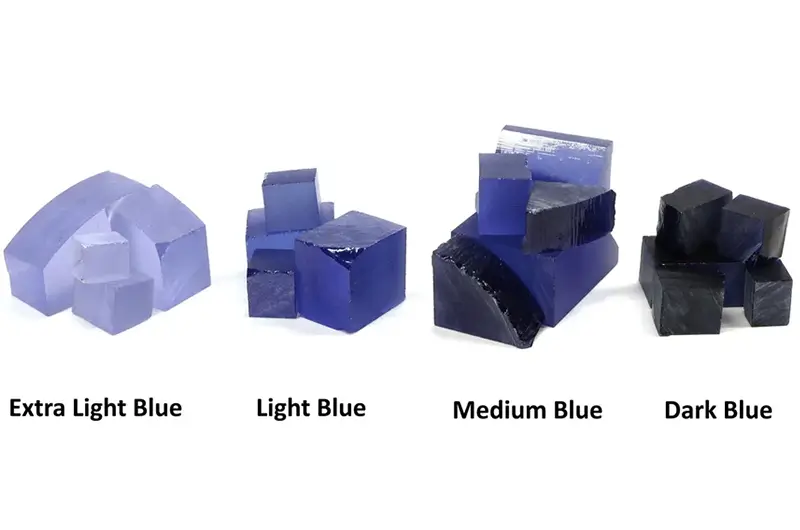
A scientific wholesale selection guide for lab grown sapphire helps distributors optimize inventory structure and improve market competitiveness. For fashion jewelry brands, accessory manufacturers, and large volume low price bulk orders, flame fusion sapphire is the most practical choice due to its stable supply, fast delivery cycle, and ultra low wholesale cost, fully meeting the demand for standardized mass production. For fine jewelry brands, high end physical stores, and custom wedding jewelry orders, flux grown sapphire is the preferred option because its natural color and premium clarity support high retail pricing and high customer recognition. For industrial buyers, optical component manufacturers, and merchants focusing on oversized high value gemstones, Kyropoulos sapphire is irreplaceable thanks to its superior structural stability and ultra high purity. Wholesalers can formulate differentiated product portfolios covering low end mass products, mid end fine jewelry stones, and high end premium grade sapphires based on the three growth processes to cover all market demands.
Quality & Pricing Rules for Bulk Lab Grown Sapphire Orders
Quality & pricing rules for bulk lab grown sapphire orders are directly determined by the sapphire growth process, forming a fixed tiered pricing system in the wholesale industry. Process cost is the primary factor: flame fusion requires the least equipment investment and time cost, so its bulk unit price remains the lowest with the highest profit space for mass sales. Flux grown sapphire needs long term constant temperature cultivation and high purity flux materials, resulting in higher production loss and manual cost, so its wholesale price is significantly higher than flame fusion products. Kyropoulos sapphire demands high precision temperature control equipment and strict dust free production environments, bringing the highest manufacturing cost and the top tier wholesale price. In terms of quality evaluation, bulk orders prioritize growth process certification, crystal clarity, color uniformity, and cutting yield rate. Flame fusion bulk orders focus on color consistency and no obvious macroscopic defects; flux grown orders inspect color layering and inclusion purity; Kyropoulos orders strictly test optical uniformity and internal stress indicators. Wholesalers can effectively control procurement risks and stabilize profit levels by following process based quality and pricing standards.
What is the highest quality lab grown sapphire process?
Kyropoulos sapphire manufacturing technology delivers the highest quality lab grown sapphire among the three mainstream processes. It produces sapphire crystals with ultra uniform internal structure, minimal micro defects, ultra low internal stress, and excellent optical stability, surpassing the quality limits of flame fusion and flux grown products.
Why is Kyropoulos sapphire more expensive than flame fusion sapphire?
Kyropoulos sapphire is more expensive than flame fusion sapphire mainly due to fundamental differences in production technology, time cost, and product performance. Kyropoulos growth requires high precision professional equipment, strict constant temperature environments, and a sophisticated slow cooling crystal pulling process with low batch yield.
Is flux grown sapphire worth bulk purchasing?
Flux grown sapphire is absolutely worth bulk purchasing for wholesalers targeting the mid to high end fine jewelry market. Although its procurement cost is higher than flame fusion sapphire, flux grown sapphire has natural color layering, ultra high clarity, and no obvious artificial growth traces, which can support high retail premium and customer loyalty.