In 2025, the global lab grown diamond market scale exceeded $12.8 billion, maintaining an annual growth rate of over 9%, driven by dual demands of sustainable consumption and cost-effective fine jewelry. Core industry trends include the rising popularity of eco-friendly luxury concepts, as more end consumers prioritize ethically produced, zero-mining-impact diamond jewelry over traditional mined diamond pieces. Technological advancements further reshape product iteration. In addition, personalized and minimalist fine jewelry has replaced exaggerated luxury styles as the mainstream consumer preference, pushing manufacturers to adjust product structures and upgrade flexible production capabilities.
Research Preferences of Target Market
In-depth research on target market preferences is essential for jewelry importers and retailers to optimize decision makeing and avoid unsalable stock, and source lab grown diamond jewelry that precisely fits local consumer demands. Modern consumer demand across global markets features clear hierarchical differences and personalized differentiation, which directly guides our bulk sourcing and retail layout.
High-end client groups prioritize authoritative product certification, original and unique design aesthetics, and exquisite refined craftsmanship above low prices. IGI certified lab grown diamonds have become a mandatory industry standard and consumer expectation for premium fine jewelry lines, as official grading reports build solid consumer trust and support higher retail premium margins for our physical stores and online retail channels.
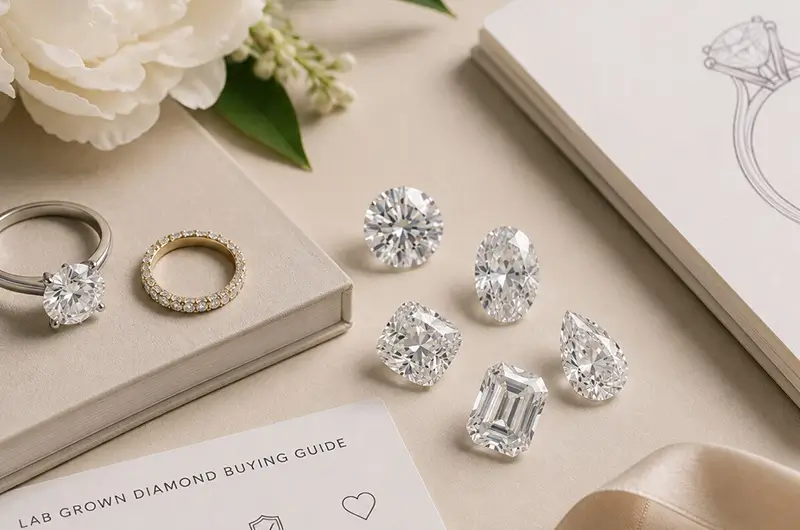
When conducting cross-border wholesale and regional retail layout, we observe striking regional aesthetic differences: European and American consumers favor clean minimalist solitaire styles and customizable lab diamond engagement rings for wedding and daily luxury scenarios, while Southeast Asian and Middle Eastern customers show strong preference for luxurious, intricately inlaid designs with larger carat lab diamonds that highlight a grand visual texture. Conducting systematic and detailed market preference research allows jewelry importers and retailers to formulate targeted sourcing strategies, accurately match multi-level consumer needs, greatly reduce inventory risks, and maximize overall retail sales and profit efficiency.
Define Target Clientele
Clear target client positioning is essential before making a procurement plan. Global offline jewelry retailers and physical chain stores require standardized, high-quality wholesale finished jewelry with complete certification and stable supply capacity to support daily store sales. Cross-border e-commerce sellers and independent luxury jewelry brands prioritize personalized design, flexible order batches and fast delivery cycles, and often require OEM and ODM customized services. High-end customized jewelry studios and private luxury designers pursue unique craftsmanship, rare colored lab diamonds and exclusive design styles, with higher requirements for manual refinement and product uniqueness. In addition, gift trading companies and corporate customized order clients constitute the incremental customer group, focusing on cost-effective batch products with unified styles. Defining precise target client groups allows sourcing manager to classify production lines, allocate resource rationally and improve customer matching accuracy and service professionalism.
Mapping Out Your Jewelry Lineup, Theme and Style
Based on market trends and target client positioning, boutique owners need to systematically plan jewelry product lineups, themes and design styles to form differentiated competitive advantages. A scientific product lineup usually divides products into three categories: basic best-selling models, mid-end trendy models and high-end customized models.
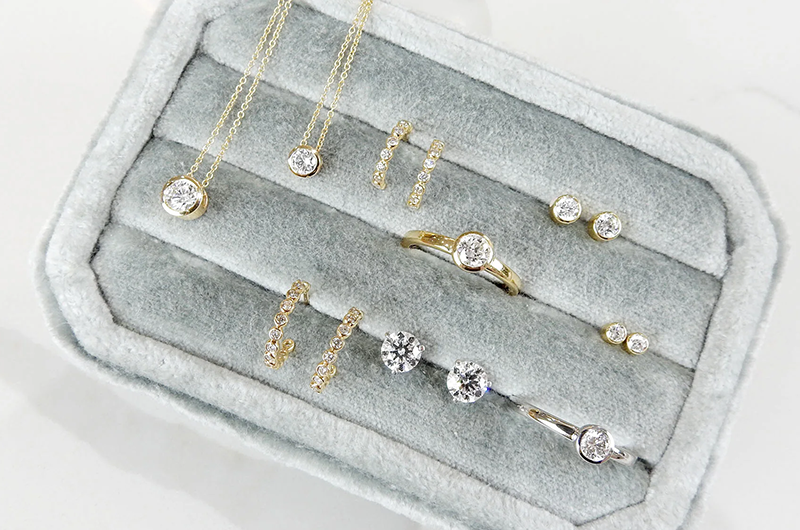
Basic best-selling products focus on classic styles such as four-claw solitaire rings, simple diamond pendants and stud earrings, featuring high universality and low inventory risk, suitable for large-batch wholesale orders.
Mid-end trendy products combine seasonal fashion elements, integrating minimalist lines, geometric shapes and subtle setting craftsmanship to cater to young consumer aesthetic trends.
High-end customized products take exclusive design as the core, covering large-carat lab diamond jewelry, colored lab diamond sets and high-artistic ornamental pieces, targeting high-end customized market demand. In terms of thematic planning, mainstream product themes include eternal love, minimalist light luxury, natural ecology and personalized custom IP, which can be adjusted according to regional market aesthetic differences. Unified and standardized style positioning helps independent jewelers form brand recognition in the wholesale market and simplify subsequent design and production management processes.
Set the Price Range and Budget
Reasonable price range and budget control run through the entire jewelry manufacturing and sourcing process, directly determining product profit margins and market competitiveness. All jewelry importers need to establish a multi-level pricing system matching the product lineup. For basic wholesale models, the pricing strategy focuses on high cost performance and thin profit with large sales volume, controlling comprehensive production costs to meet the low-batch and large-volume procurement needs of small and medium-sized retailers. For mid-end trendy products, pricing balances design value and craft costs, appropriately raising the premium space of trendy elements and fine craftsmanship. For high-end customized products, pricing covers rare stone costs, manual design fees and exclusive service costs to maintain high-end market positioning. In terms of budget management, traders need to allocate funds for raw material procurement, design research and development, production processing, quality inspection and logistics transportation in advance. Dynamic budget adjustment is required according to raw material market price fluctuations and order volume changes to avoid cost waste and capital backlog, ensuring stable profit margins for each product line.
Sketch Your Jewelry Designs
Professional design sketching is the initial link of product formal production and the key to realizing differentiated product competitiveness. Adopt a dual design model of independent research and development and customer customized design. For independent R&D products, the design team combines market trend data, consumer aesthetic preferences and product thematic positioning to complete hand-drawn sketches and 3D digital modeling. Each sketch needs to mark detailed parameters including diamond inlay position, metal outline size, proportion structure and craft details to provide accurate production standards for subsequent processing.
Choose the Right Materials
Material selection directly determines the quality, texture and durability of lab grown diamond jewelry, and is a key link in controlling product quality and cost. Core materials include lab grown diamonds and precious metal accessories. In terms of diamond selection, we match different quality stones according to product positioning: basic models select IGI-certified standard round brilliant-cut lab diamonds with stable 4C parameters to ensure cost performance; mid-to-high-end models select high-clarity, high-color CVD or HPHT lab diamonds, and support customized selection of special-shaped diamonds and colored diamonds. For metal materials, mainstream options include 925 silver, 14K gold, 18K gold and platinum. 925 silver is suitable for light luxury daily jewelry with low unit price, while 18K gold and platinum are widely used in mid-to-high-end fine jewelry due to their high hardness, oxidation resistance and superior texture. Scientific material classification and selection can effectively balance product quality and production costs, meeting the differentiated needs of different target markets.
Discover Reliable Lab Diamond Jewelry Suppliers
Stable and reliable supplier resources are the foundation of continuous and standardized manufacturing production, especially for raw material supply in the lab diamond jewelry industry. The audit standards include supplier production qualification, diamond certification authenticity, production capacity stability, raw material quality consistency and after-sales service guarantee. Priority is given to suppliers with complete IGI and GIA certification systems, standardized production workshops and stable supply chains to avoid raw material quality fluctuations and delivery delays caused by unqualified suppliers. Meanwhile, we maintain cooperative relationships with multiple alternative suppliers for core raw materials to cope with market supply fluctuations and price changes. Long-term stable supplier cooperation can not only ensure the consistency of finished product quality but also obtain favorable wholesale procurement prices, reducing comprehensive production costs and improving overall market competitiveness.
Manufacturing: Handmade vs. Mass Production
Reasonable selection of production modes is crucial to balance production efficiency, product quality and order adaptability. Mass production is applicable to standardized basic best-selling jewelry products. Through standardized assembly line operations, mechanized cutting, inlay and polishing processes are adopted to realize large-batch, high-efficiency production, which greatly reduces unit production costs and shortens delivery cycles, perfectly matching the large-volume procurement demand of wholesale customers.
Handmade production focuses on high-end customized and art-level jewelry products. Senior craftsmen complete fine inlay, detail polishing and texture carving manually, which can realize complex design structures and unique artistic details that mechanized production cannot achieve, with higher product fineness and uniqueness. Or adopt a mixed production mode: standardized products rely on assembly line mass production to ensure efficiency and cost advantages, while customized and high-end products adopt handmade craftsmanship to guarantee product premium and uniqueness. This dual production model can fully cover diversified order needs from bulk wholesale to high-end customization.
Selecting a Manufacturer
For brand buyers and downstream distributors, selecting a professional and reliable manufacturing partner is the key to ensuring product quality and stable supply, while for production-oriented manufacturers, standardized self-positioning and capability building are the core to winning long-term cooperation. Excellent lab diamond jewelry manufacturers need to have complete production qualifications, independent design teams, standardized production workshops and perfect quality inspection systems. In addition to basic production capabilities, professional manufacturers can provide one-stop services including design customization, material selection, production processing and after-sales support. When screening cooperative manufacturers, buyers need to focus on production capacity matching degree, craft level, order response speed and delivery punctuality.
Define Standards of Finished Pieces and Regular Inspection
Unified finished product standards and standardized regular inspection mechanisms are guarantees to maintain consistent product quality and stabilize market reputation. Complete finished product production standards covering diamond inlay firmness, metal surface finish, product size error, color uniformity and certification matching degree grow essential across manufacturing. All finished products must meet international fine jewelry production specifications, with zero tolerance for problems such as loose diamond inlay, metal scratches, oxidation discoloration and size deviation. Regular daily, weekly and monthly quality inspections are carried out to track product quality stability, summarize production process problems and optimize production links in a timely manner. For customized products, special inspection standards are formulated according to customer personalized requirements to ensure that finished products fully meet order specifications. Strict quality standards and inspection systems effectively reduce product defective rates and after-sales risks.
Figuring Out Jewelry Sourcing Expenditures
Accurate accounting and control of fine jewelry procurement and sourcing expenditures are essential for manufacturers to optimize cost structure and improve profit margins. The overall sourcing expenditure of lab grown diamond jewelry covers multiple core modules, and refined cost accounting helps realize refined operation management.
First is product cost, which accounts for the largest proportion of total expenditure, including core costs such as lab diamond raw materials, precious metal materials and auxiliary processing materials, as well as design research and development and production processing costs.
Second is logistics cost, including domestic raw material transportation fees, finished product warehousing and distribution fees, and international cross-border logistics freight for export orders.
Third is tariff expenditure, involving import tariffs of upstream raw materials and export tariffs and customs clearance fees of finished jewelry products in different countries and regions.
In addition, sourcing expenditures also include supplier management costs, quality inspection costs and risk reserve costs caused by raw material price fluctuations.
Finalize After-Sales & Payment Terms Before PI
Standardized confirmation of after-sales service and payment terms before issuing the proforma invoice (PI) is a key link to standardize transaction processes and avoid cooperation disputes. In terms of payment terms, we formulate flexible and standardized payment rules according to order types and cooperation cycles. For new customers and bulk wholesale orders, we adopt a deposit plus balance payment model, with a reasonable proportion of advance deposit to ensure stable raw material procurement and production arrangement.
In terms of after-sales terms, we clearly define after-sales service scope including product quality problems, defective product replacement, size adjustment and certification document provision. We clarify the time limit for customer feedback on quality problems and processing cycle to ensure efficient resolution of after-sales issues. All payment and after-sales terms are fully communicated and confirmed with customers before PI issuance, and uniformly specified in transaction documents to ensure transparent and standardized transaction processes and avoid subsequent cooperation disputes.
Inspect Goods Upon Arrival
Goods arrival inspection is the final quality control link before products are delivered to downstream customers, and also an important barrier to maintain brand reputation and customer trust. After the finished products are produced and packaged and arrive at the designated delivery warehouse or customer receiving location, we arrange professional quality inspectors to conduct secondary arrival inspection. The inspection content includes product quantity verification, appearance quality inspection, diamond certification matching inspection, packaging integrity inspection and accessory completeness inspection.